
Last updated November 25, 2026
 Sweep & inspection
 Caps & crowns
 Flue relining
 Masonry repair
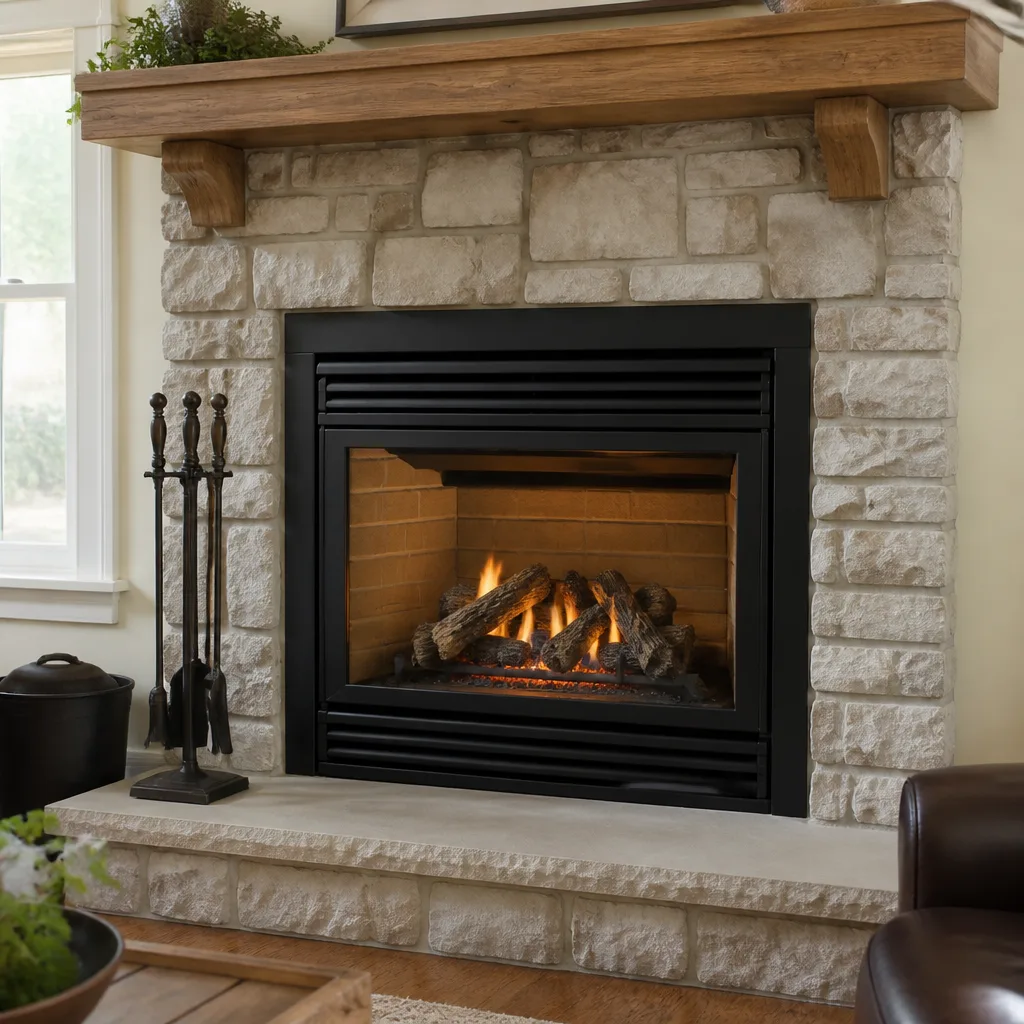 Gas fireplace service
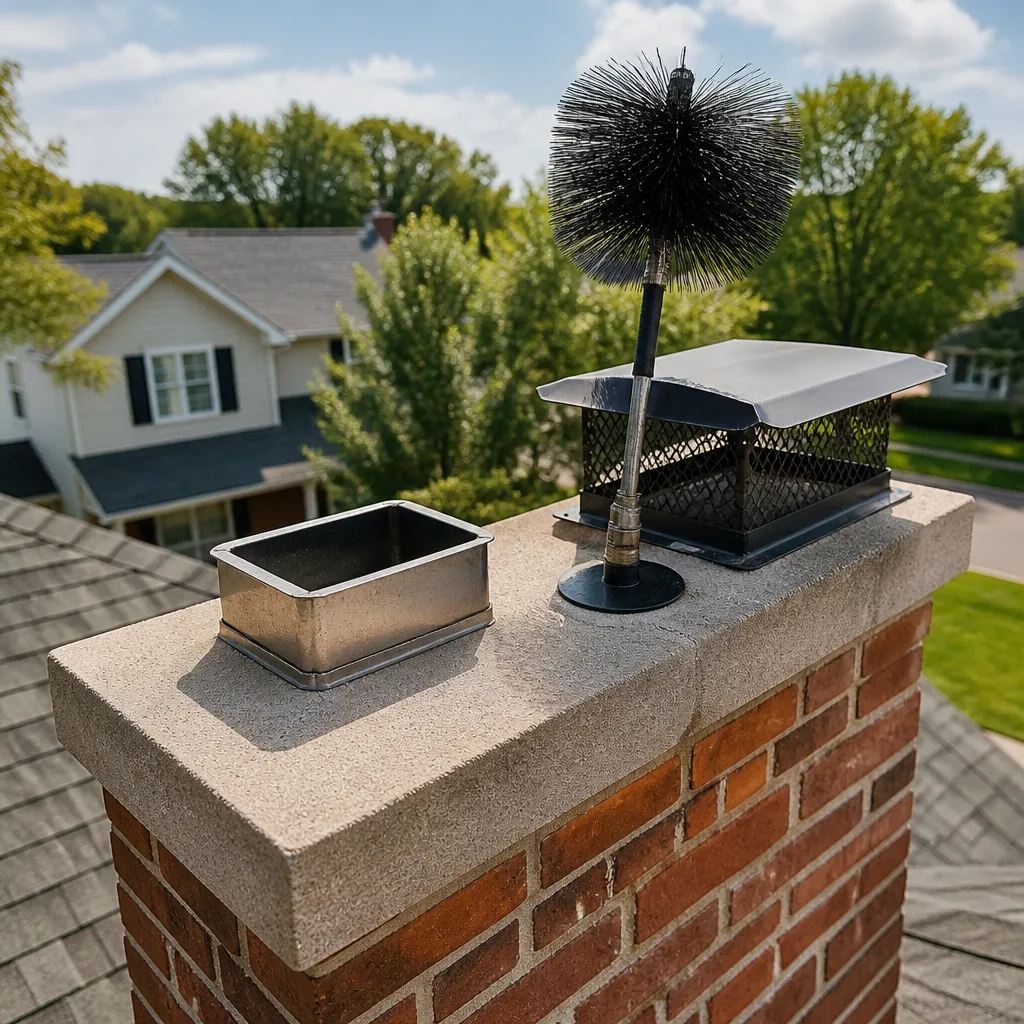
Level 1 sweep and inspection to the NFPA 211 annual standard - flue, crown, cap, and flashing checked and photographed
Chimney sweep logs do not sweep chimneys. They loosen some creosote - which then falls where a brush and vacuum still have to collect it.
Chimney Sweep Maintenance Checklist for Sedgefield Homeowners
The most dangerous chimney condition a homeowner will never see from the firebox opening is a cracked flue tile. It hides behind the damper, above the smoke shelf, out of sight and out of reach of any flashlight you can point upward. Most published chimney checklists blur this line. They hand you a list of items and let you assume that peering up the flue counts as an inspection. It doesn’t. This guide draws the line clearly: what you can genuinely verify yourself, what only a camera scan and a trained eye can confirm, and the red flags in a Sedgefield home that mean stop burning tonight rather than book a cleaning sometime this month.
Quick Answer
A workable chimney maintenance checklist for a Sedgefield homeowner has three layers: monthly checks you can do in two minutes (damper movement, visible creosote, cap condition from the ground), a professional sweep and level-one inspection once a year before burning season, and a camera-based inspection every few years or any time you notice a change. Homeowner-visible items catch surface problems. Liner integrity, smoke chamber parging and flashing seals require a professional eye, a camera, and often a photo report you can review yourself.
Styles & brands we work with
- Sweep & inspection
- Caps & crowns
- Flue relining
- Masonry repair
- Gas fireplace service
Table of Contents
- What You Can Check Yourself vs. What Needs a Professional
- The Homeowner-Visible Checklist
- The Pro-Only Checks: Liner, Smoke Chamber, Flashing
- Sedgefield-Specific Warning Signs: Efflorescence and Spalling
- How Often to Check What: A Frequency Table
- How to Document Your Chimney Year Over Year
- Red Flags That Mean Stop Burning Tonight
- Seasonal Steps for a Sedgefield Home
What You Can Check Yourself vs. What Needs a Professional
The single biggest mistake in chimney maintenance is assuming that what you can see from the hearth is what matters most. In our experience, the reverse is closer to true. The firebox you can see is the least likely place for a serious problem to develop. The liner above it, the smoke chamber behind it, and the flashing where the chimney meets the roof are where the real failures happen.
That doesn’t mean homeowner checks are useless. They’re the front line. They catch the things that change fast – a missing cap, a damper that sticks, a crack in the firebox brick that wasn’t there in October. Your checks are what tell you when to escalate to a professional before a small problem has a season to grow.
Here’s the clean division:
- Homeowner-visible: firebox interior and brick joints, damper operation, cap appearance from the ground, crown edges, visible soot and creosote at the flue opening, exterior brick appearance, and any new staining on interior walls near the chimney.
- Professional-only: flue liner integrity (needs a camera), smoke chamber parging and shape, flashing seals at the roof, mortar joints above roofline, internal obstruction (bird nests, leaves, fallen tile), and creosote thickness deep inside the flue.
A surprising number of chimney problems we find in Sedgefield homes were visible from the ground months earlier – as a rusted cap, a cracked crown, or a stain on the brick. The homeowner just didn’t know what they were looking at. That’s what the rest of this guide fixes.
The Homeowner-Visible Checklist
This is the part of the checklist you actually own. Set a reminder once a month during burning season and walk through it in under five minutes. Nothing here requires tools beyond a flashlight and, for the last item, a pair of binoculars or a phone camera with zoom.
- Open and close the damper. It should move smoothly through its full range and seat flush when closed. A damper that sticks, grinds, or won’t fully close is letting warm house air escape up the flue all winter and cold air down it when the fireplace is idle.
- Look into the firebox with a flashlight. Check the firebrick for cracks, the mortar joints between them for missing material, and the back wall for any dark staining that wasn’t there before. Small hairline cracks in the firebrick are normal. Cracks wider than a credit card, or missing chunks of mortar, are not.
- Peer up past the damper with the flashlight. You won’t see the full flue, but you can see the first few feet and the smoke shelf area. Look for shiny, tar-like buildup (that’s stage-three creosote), soot flakes that look like gray tissue paper, and any obstruction at the flue opening.
- Stand back in the yard and look at the cap and crown. The cap should be intact with no rust-through, no missing mesh, no sagging. The crown – the concrete top of the chimney – should have visible slope away from the flue and no cracks wide enough to catch a fingernail.
- Check the exterior brick from the ground. Look for white, chalky staining (efflorescence), flaking or crumbling mortar (spalling), and any leaning or bulging sections. Photograph anything that looks different from last season.
- Look at interior walls near the chimney. Any new brown or gray staining on drywall or plaster, especially near the ceiling, is a flashing or crown leak that needs professional attention.
If any step turns up something you’re not sure about, the right move is to photograph it, note the date, and have it looked at before the next fire.
The Pro-Only Checks: Liner, Smoke Chamber, Flashing
These three items are the reason a chimney sweep is not a DIY chore. Each requires equipment, training, or access that most homeowners don’t have – and each is where the failures that actually matter are usually found.
Flue liner integrity
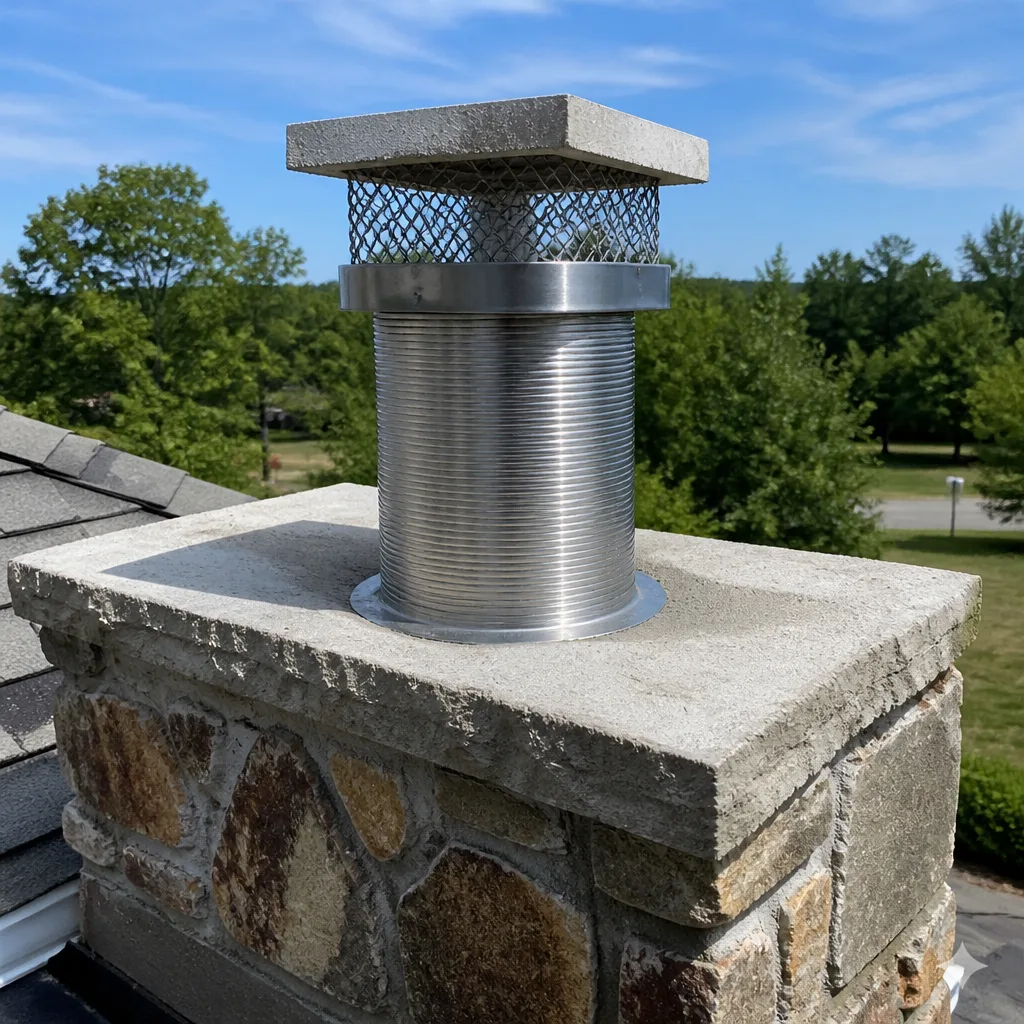
The clay flue tiles inside your chimney are what keep combustion gases and heat away from the wood framing of the house. A single cracked tile, a missing chip at a joint, or an offset between tiles creates a path for heat and carbon monoxide into the structure. You cannot see this from the firebox. It takes a camera scan run down from the top or up from the bottom, and in our experience, most homes that had never had a camera inspection turned up at least one condition worth knowing about. When a liner is compromised but the tiles are still mostly intact, the Chimney Sweep Sedgefield team can often restore it using the HeatShield ceramic resurfacing system rather than tear it out. When the damage is too widespread for resurfacing, a DuraFlex flexible stainless-steel liner is the standard relining path – built to last, not a patch.
Smoke chamber parging
The smoke chamber is the funnel between the firebox and the flue. Its walls should be smooth and sloped so smoke climbs cleanly. Builder-grade construction often leaves them rough and corbelled, which gives creosote a place to collect and slows the draft. A proper inspection checks the parging and shape of the smoke chamber – something no homeowner can see from below.
Flashing seals
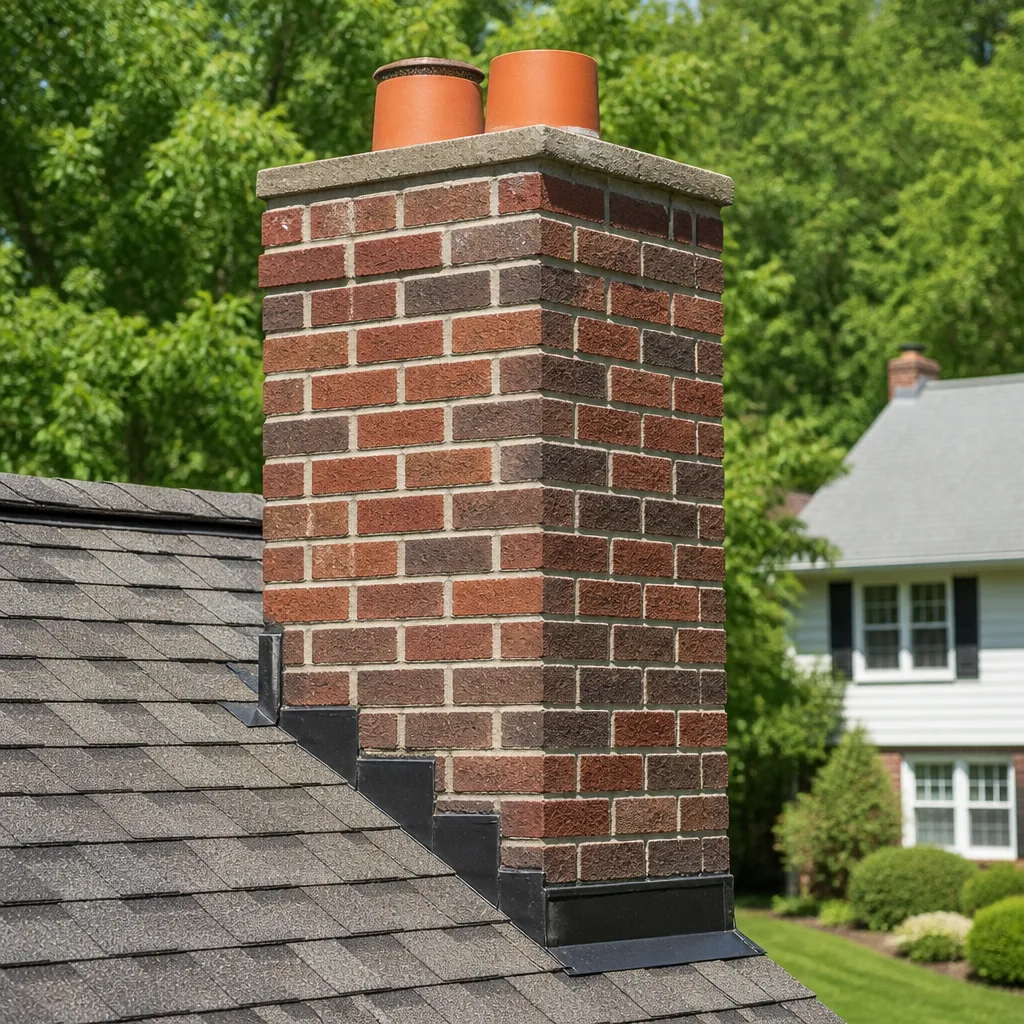
Flashing is the metal where the chimney passes through the roof. It’s the most common source of chimney leaks and the hardest thing to see without getting on the roof. A failed flashing seal shows up as interior staining long after the water has been getting in. A professional inspection checks the flashing, seals, and the chimney’s roof transition directly.
Together, these three checks are also a large part of why we recommend the chimney sweep visit happen with a camera on hand. A cleaning without a look at the liner is only half the job.
Sedgefield-Specific Warning Signs: Efflorescence and Spalling
Sedgefield’s climate – humid Piedmont summers followed by freeze-thaw cycles in December and January – produces two exterior warning signs that homeowners elsewhere may never see. Learn what they look like and you’ll catch a chimney problem a season before it becomes a structural one.
Efflorescence: the white stain
Efflorescence looks like a white, chalky, powdery bloom on the brick face, usually strongest on the north or shaded side of the chimney. It’s a mineral deposit left behind when moisture moves through the brick and evaporates at the surface. In Sedgefield, it’s most visible after a humid summer, when the brick has held moisture for months. A light dusting that brushes off is cosmetic. Persistent heavy bloom, or bloom that keeps coming back after rain, means water is getting into the chimney from somewhere – a failed crown, an unsealed cap, or failing flashing.
Mortar spalling: the freeze-thaw catch
Mortar spalling appears as flaking, chipping, or crumbling at the joints between bricks. In Sedgefield it typically shows up in January and February, after moisture that soaked in during the wet months freezes and expands, breaking the mortar face off. If you can crumble the mortar with a fingernail or see recessed joints where the mortar has fallen away, the chimney has lost some of its structural integrity and needs a professional look before the next season. Photograph spalling in January, compare with October’s photo, and note whether the joints have recessed further. That’s evidence for a real repair conversation, not a sales pitch.
Interior fireplace problems are worth flagging too. If your firebox has cracked firebrick or a damaged damper, fireplace repair is a separate scope of work from a sweep – but it’s often caught during the same visit.
How Often to Check What: A Frequency Table
Most checklists give you a list without telling you when. This one tells you when. Use this table as your scheduling reference.
| Task | Frequency | Who does it |
|---|---|---|
| Damper operation | Monthly during burning season | Homeowner |
| Firebox visual inspection | Monthly during burning season | Homeowner |
| Cap and crown check from ground | Monthly, plus after any major storm | Homeowner |
| Exterior brick and mortar scan | Monthly, with photos | Homeowner |
| Interior wall staining check | Monthly | Homeowner |
| Full sweep and level-one inspection | Once a year, pre-season | Professional |
| Camera scan of liner | Every 3 years, or any time a change is noticed | Professional |
| Smoke chamber and flashing inspection | Every 3 years, plus with any leak noticed | Professional |
| Chimney cap and crown condition | Every visit; replace or reseal as needed | Professional |
| Post-season sweep (if burning is heavy) | Once a year if you burn more than a cord | Professional |
The pre-season sweep in Sedgefield is best scheduled in late September or early October, before the first cool nights turn into regular fires. The level-one inspection comes with it. The camera scan every three years catches gradual liner deterioration before it becomes a practical problem. And if you burn through more than a cord of wood in a winter, a post-season sweep is worth doing – creosote that sat all summer can harden further.
How to Document Your Chimney Year Over Year
Chimney deterioration is gradual by design. A single photograph of a cracked crown means little. Five photographs taken in the same spot over five Octobers means everything. Here’s the system.
- Pick three fixed camera positions. One standing in the yard looking at the chimney face, one at the crown from a slight distance, and one in the firebox. Same spots every time.
- Photograph once in October and once in February. October catches what summer did. February catches what freeze-thaw did in Sedgefield.
- Label each photo with the date and location in the filename (e.g., “chimney-north-face-2026-10.jpg”). A folder of “IMG_4451” files is useless for comparison.
- Note changes in a simple notebook. A line or two per entry is enough: “Cap mesh starting to sag, north side” or “Mortar joints recessed at bottom 3 feet.” Your future self will thank you.
- Ask the sweep for a camera report on every visit. A good inspection comes with photos of what the camera saw. Save those alongside your own – it’s the difference between a diagnosis and a guess.
When you bring these photographs to a professional visit, the conversation shifts. It’s no longer “do I need work?” It’s “here’s the change I’ve seen – is this within the normal range, or is it time for repair?” That’s a much better conversation to have.
Red Flags That Mean Stop Burning Tonight
Most maintenance items are about planning. These are not. If any of the following is true, don’t light the next fire. Shut the fireplace down and get it looked at before you burn again.
- Any smoke coming into the room when the fire is burning, or a draft that reverses when you close the doors. Both can indicate a blockage or a failing smoke chamber.
- A crack, chip, or missing piece in the firebox that you can see daylight or brick structure through – not a hairline crack, but a structural break.
- Shiny, tar-like creosote visible past the damper. Stage-three creosote is the fuel for a chimney fire, and it doesn’t come off with a brush alone.
- A carbon monoxide alarm sounding with no other obvious cause. This is a stop-firing, evacuate, call-the-fire-department situation, and it is not something to defer until a scheduled cleaning.
- Visible staining on interior walls near the chimney. Water intrusion is happening now; ongoing burning drives moisture into the structure.
- A cap that’s rusted through, missing mesh, or sitting loose. Water and animals are getting in.
- Crumbling or missing mortar at the roofline. This is a structural matter, not a cosmetic one.
When a flag is up, the safe move is always the same: stop using the fireplace, photograph the condition, and get a professional inspection with a camera. The cost of a diagnostic visit is trivial compared to the cost of a chimney fire or a carbon monoxide incident. Every one of these items is worth calling about today, not waiting on the calendar.
Seasonal Steps for a Sedgefield Home
Sedgefield’s Piedmont climate sets the pace. Hot, humid summers push moisture into exterior brick; cold snaps in December and January stress the mortar; spring rains test whatever the winter left weak. Here’s how the calendar lines up.
Late summer (August-September)
Book the pre-season professional sweep and inspection. This is also when you do your October photos – the brick tells you what the humid months did. Look for fresh efflorescence.
Fall (October-November)
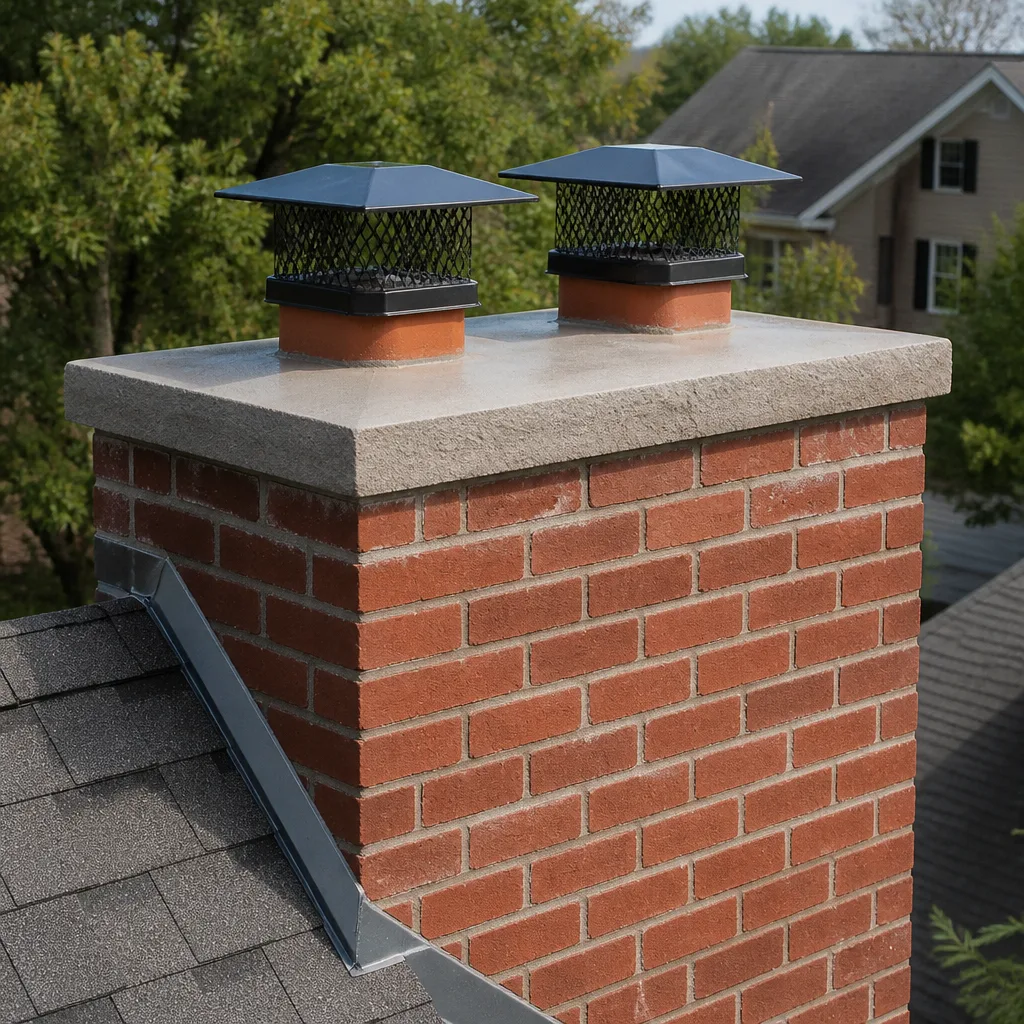
Complete the pre-season sweep and the level-one inspection. Get the cap and crown in solid shape before the wet season, and ask about the chimney cap & crown specifically – water intrusion through the crown and around the cap is the leading cause of chimney deterioration we see in Sedgefield homes. If the cap or crown needs work, doing it now avoids doing it in a cold snap.
Winter (December-February)
Monthly checks are the main priority. Watch for mortar spalling at the roofline; January and February are when freeze-thaw does its worst. Photograph what you see.
Spring (March-April)
Post-season sweep if you burned more than a cord. This is also a good time to look at the firebox and damper after a winter of use, since small issues are cheapest to fix before summer.
The rhythm is simple: professional work before and after the burning season, homeowner checks during it. That’s the shape of the whole checklist.
Common Mistakes to Avoid
- Treating a flashlight-on-the-flue check as an inspection. It’s not. It’s the first foot of a flue that could be 25 feet long. A camera scan sees what a flashlight can’t.
- Ignoring efflorescence because “it brushes off.” Doing that in Sedgefield after a wet summer is how a crown crack grows into a structural repair across two seasons.
- Assuming a cracked firebrick is fine because the fire “still works.” A crack wider than a credit card is letting heat where the firebox wasn’t designed to send it. Get it evaluated.
- Skipping the cap check because it’s “up there where I can’t reach it.” You don’t need to reach it. Stand in the yard with a camera zoom. A missing mesh or rusted-through top is visible from ground level and worth a call.
- Doing a sweep and skipping the inspection. A cleaning without a camera look at the liner is half a job. Both belong on the same visit.
- Hiring a sweep who doesn’t offer the repair. Getting a diagnosis from one company and the repair from another is exactly how finger-pointing starts when something goes wrong later.
- Not documenting. Without photographs, every year’s inspection starts from scratch. With them, you can see a trend – and a trend is what turns maintenance into a real repair plan.
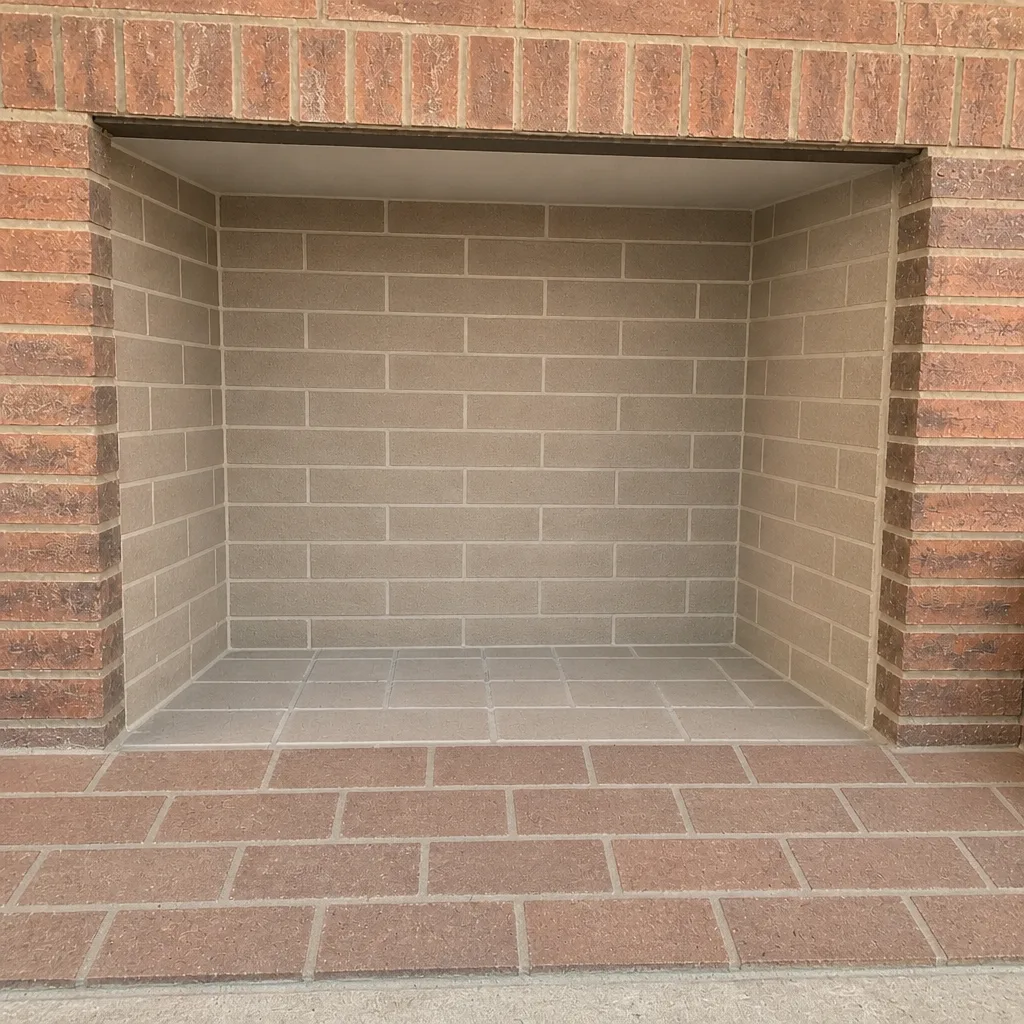
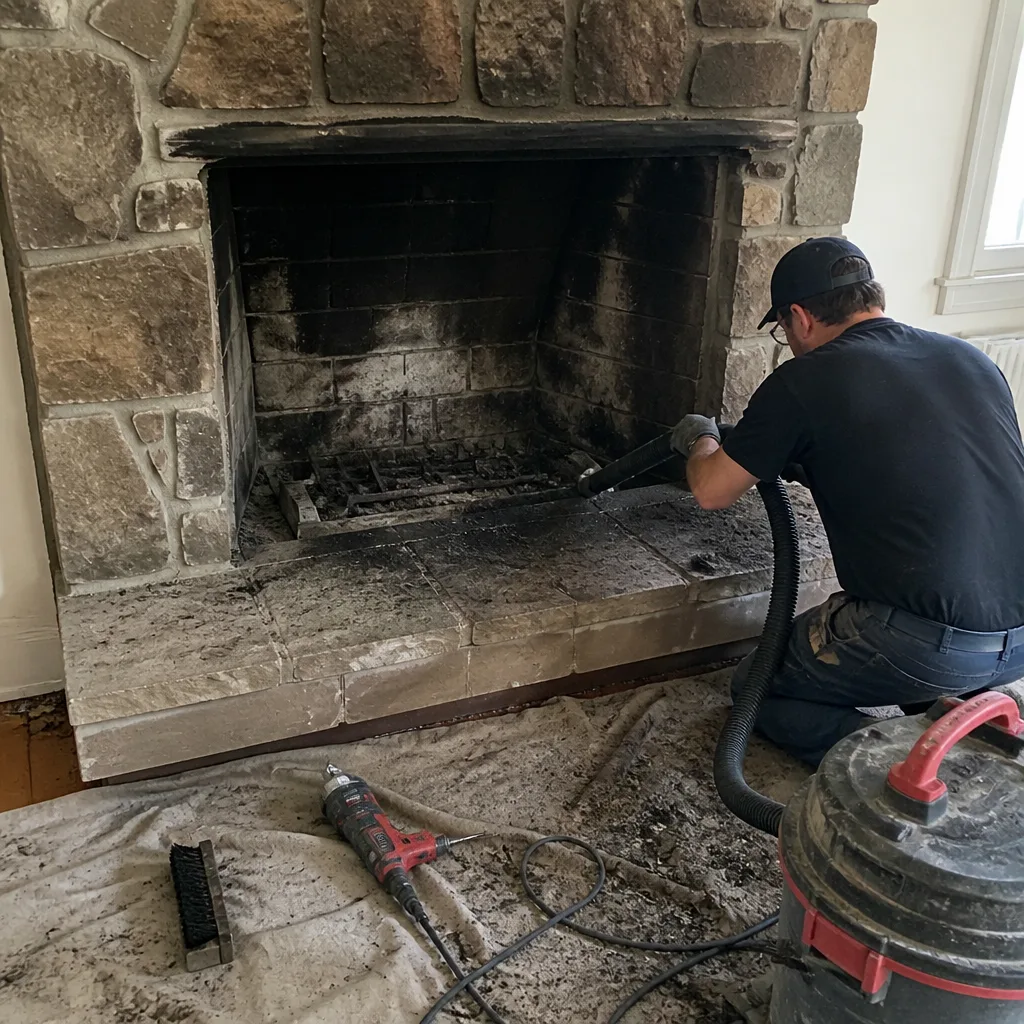
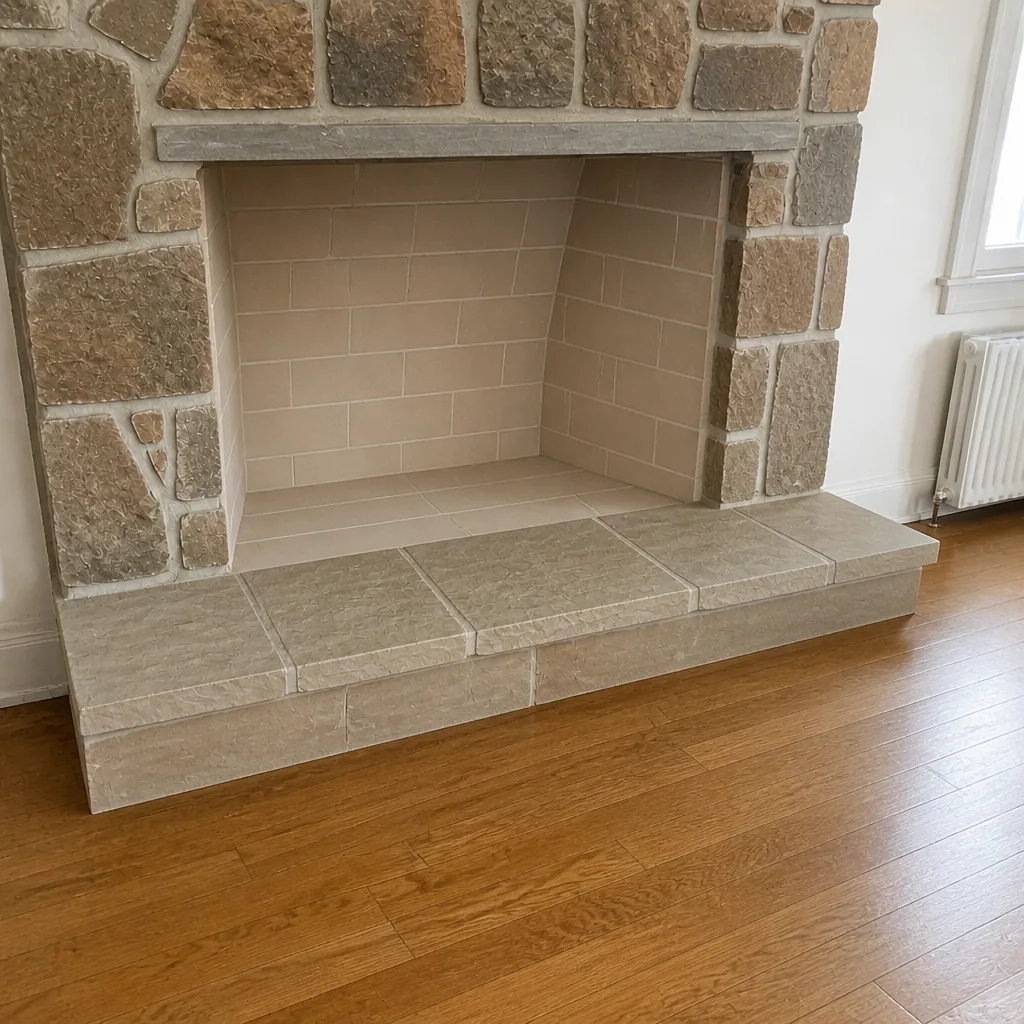
See the difference
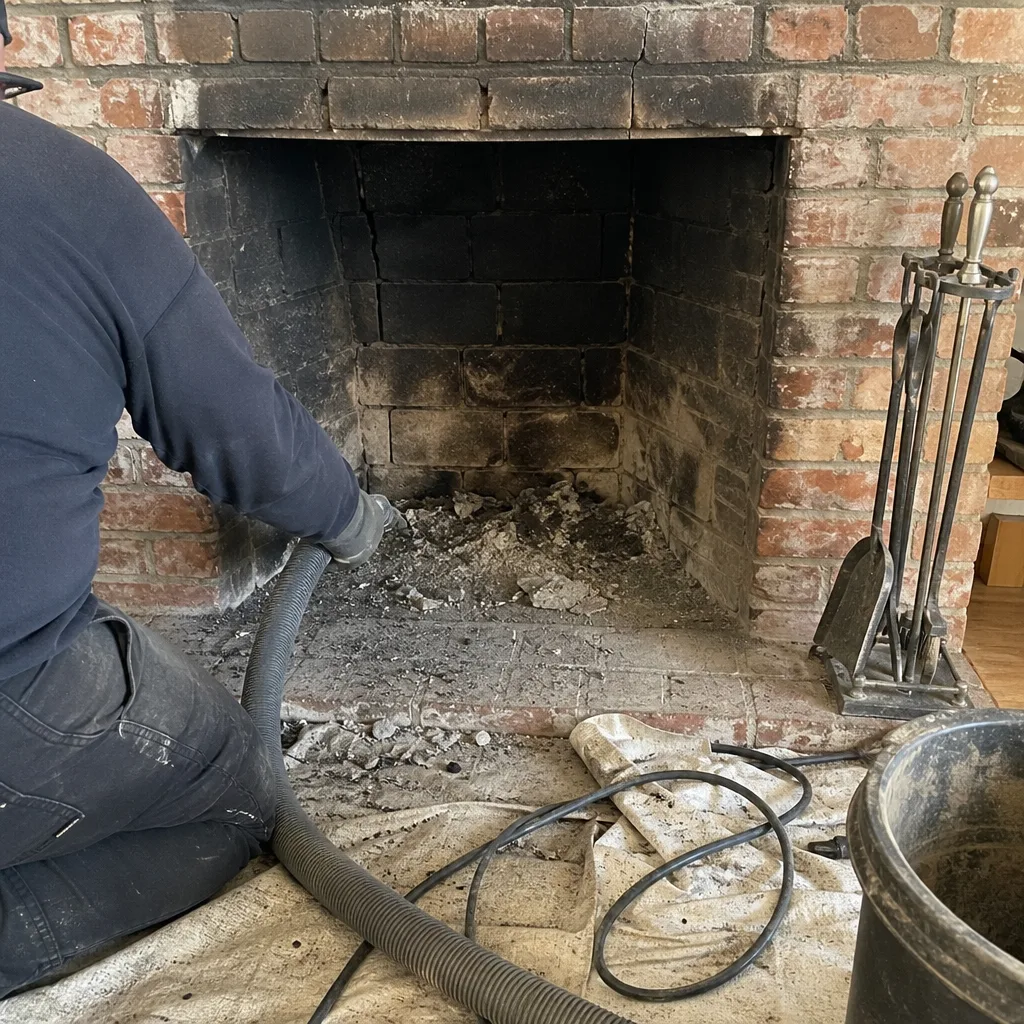 Before
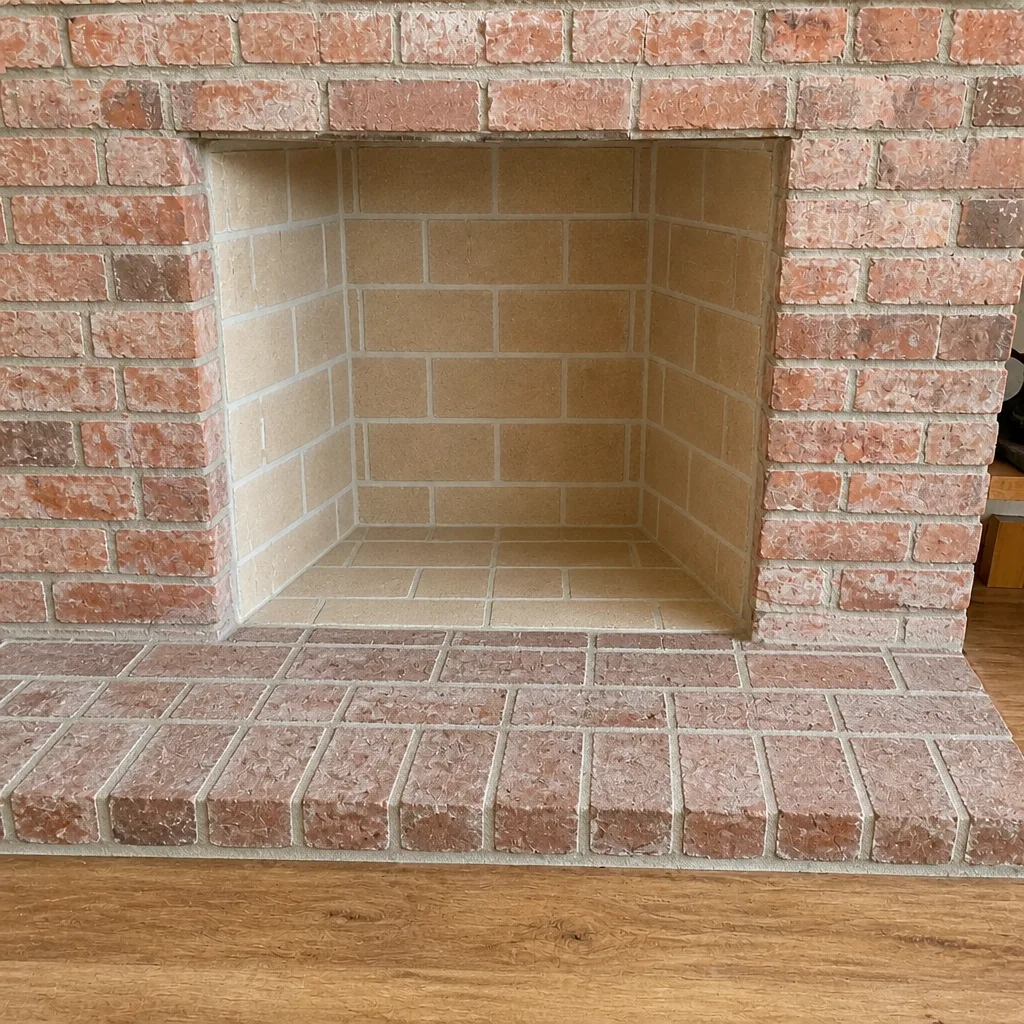 After
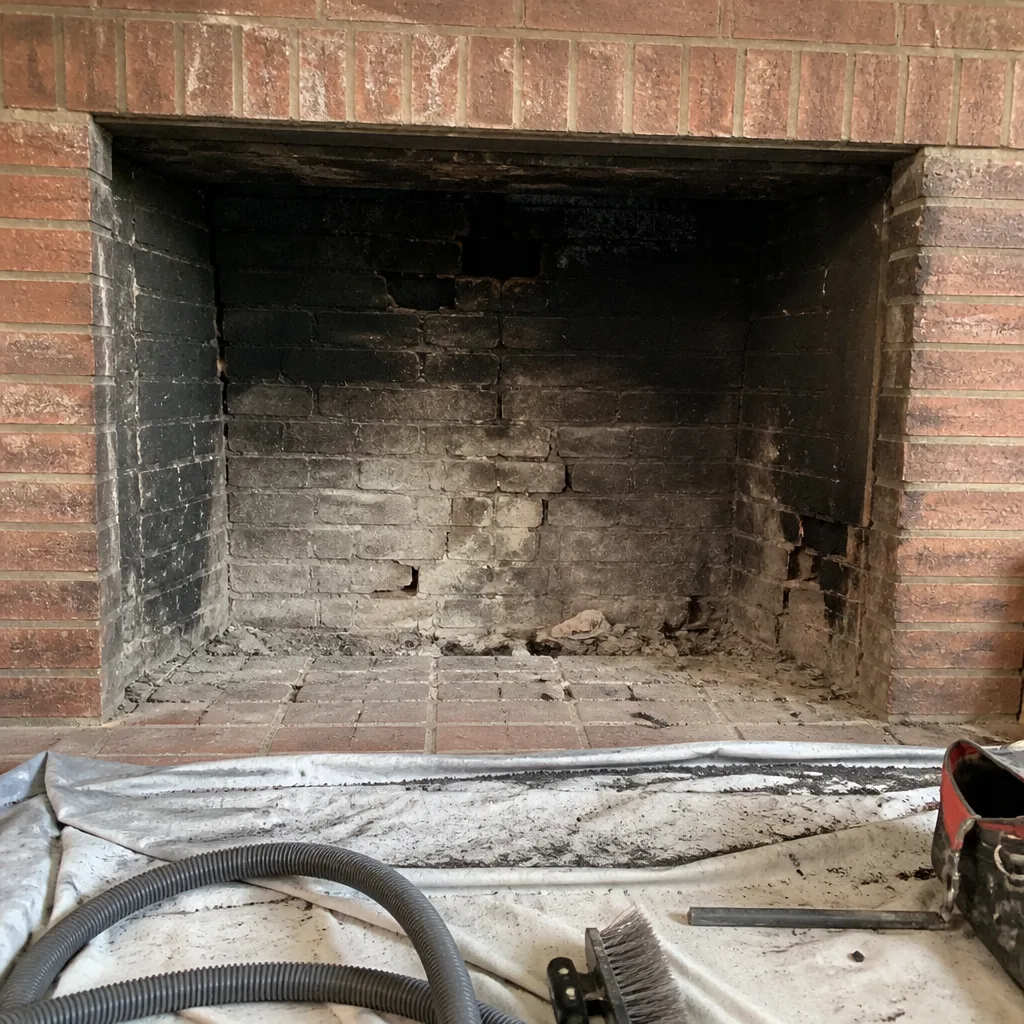 Before
 After
 Before
 After
When to Call a Professional
Call a professional chimney sweep in Sedgefield if any of these apply: you haven’t had the chimney swept in more than a year of regular burning; any red flag in this guide is currently true; you’ve never had a camera inspection of the liner; you’ve noticed new staining on interior walls; the cap, crown, or flashing is showing visible failure; or you’re simply not sure whether what you’re seeing is normal. A free estimate is the right first conversation – nothing is recommended without evidence, and a good sweep will tell you plainly when work can wait. Chimney Sweep Sedgefield offers free estimates in Sedgefield: call (855) 726-7779. We answer 24/7. Fast dispatch from 7am to 7pm, Sunday through Friday. Our technicians have up to 9 years of experience, and we use the brands we use because they last: DuraFlex for relining, HeatShield for restoration, Olympia Chimney and Famco for components, Copperfield for the cap and crown work that stops water before it starts structural damage.
Frequently Asked Questions
Once a year with regular burning is the working standard, and more often if you burn more than a cord of wood in a season. Sedgefield’s long burning season means creosote accumulates steadily; the pre-season sweep in late September or early October is the right time so the system is clean when the first cool nights arrive. Pair it with a camera inspection every three years. Call (855) 726-7779 for an exact quote – estimates are free.
You can genuinely verify the firebox interior, damper operation, cap and crown appearance from the ground, and interior wall staining. A professional verifies liner integrity with a camera, smoke chamber parging, flashing seals at the roof, and creosote thickness deep inside the flue. The professional checks are the ones that catch the failures that actually cause chimney fires and carbon monoxide problems. Call (855) 726-7779 if any homeowner check turns up something you’re not sure about – estimates are free.
Efflorescence is a white, chalky bloom on the brick that appears when moisture moves through the chimney and evaporates at the surface. In Sedgefield it shows up most after humid summers. A light dusting is cosmetic; persistent bloom that keeps returning means water is getting into the chimney from a failed crown, cap, or flashing, and that’s a call-worthy condition. Call (855) 726-7779 to book an inspection – estimates are free.
A camera scan is the only way to see liner cracks, offset tiles, and internal obstructions. A broom sweep can look fine at the opening and still have a cracked tile 10 feet up. In our experience, a camera inspection on a chimney that’s never had one frequently turns up something worth fixing before it becomes structural. Every three years, or any time a change is noticed, is the working standard. Call (855) 726-7779 for a free estimate.
Two specific risks build over time. Creosote accumulates inside the flue and, at stage three, can ignite into a chimney fire. A cracked flue tile or smoke chamber creates a path for carbon monoxide and heat into the framing of the house. Neither shows up on a homeowner check until it’s caused damage. Skipping maintenance doesn’t mean nothing happens – it means the thing that happens happens out of sight. Call (855) 726-7779 to schedule a sweep and inspection – estimates are free.
Small hairline cracks in firebrick are normal and not on their own a reason to stop burning. A crack you can fit a coin into, a missing chunk, or mortar falling out of the joints is a different matter – that means the firebox has lost integrity and the fireplace should be shut down until it’s evaluated. When in doubt, photograph it and ask. Call (855) 726-7779 for a free estimate.
The Bottom Line
A chimney maintenance checklist works when it separates what you can actually verify from what needs a professional eye. Your monthly checks catch the fast-moving, visible problems – damper, firebox, cap, brick appearance, interior staining. The annual sweep and level-one inspection catch the rest. A camera scan every three years catches the liner deterioration that no flashlight will ever find. And in Sedgefield specifically, the seasonal signs to watch are efflorescence after humid summers and mortar spalling after December and January freeze-thaw. Document what you see, compare year over year, and treat the red flags in this guide as a stop-burning call, not a scheduling note. Our technicians have up to 9 years of experience, we carry the professional-grade brands that make repairs last, and we do the diagnosis and the repair ourselves so nothing gets lost between crews. When you’re ready to have the chimney looked at, call (855) 726-7779 for a free estimate. We answer 24/7, with fast dispatch from 7am to 7pm, Sunday through Friday.
Written by the team at Chimney Sweep Sedgefield.