
Last updated November 25, 2026
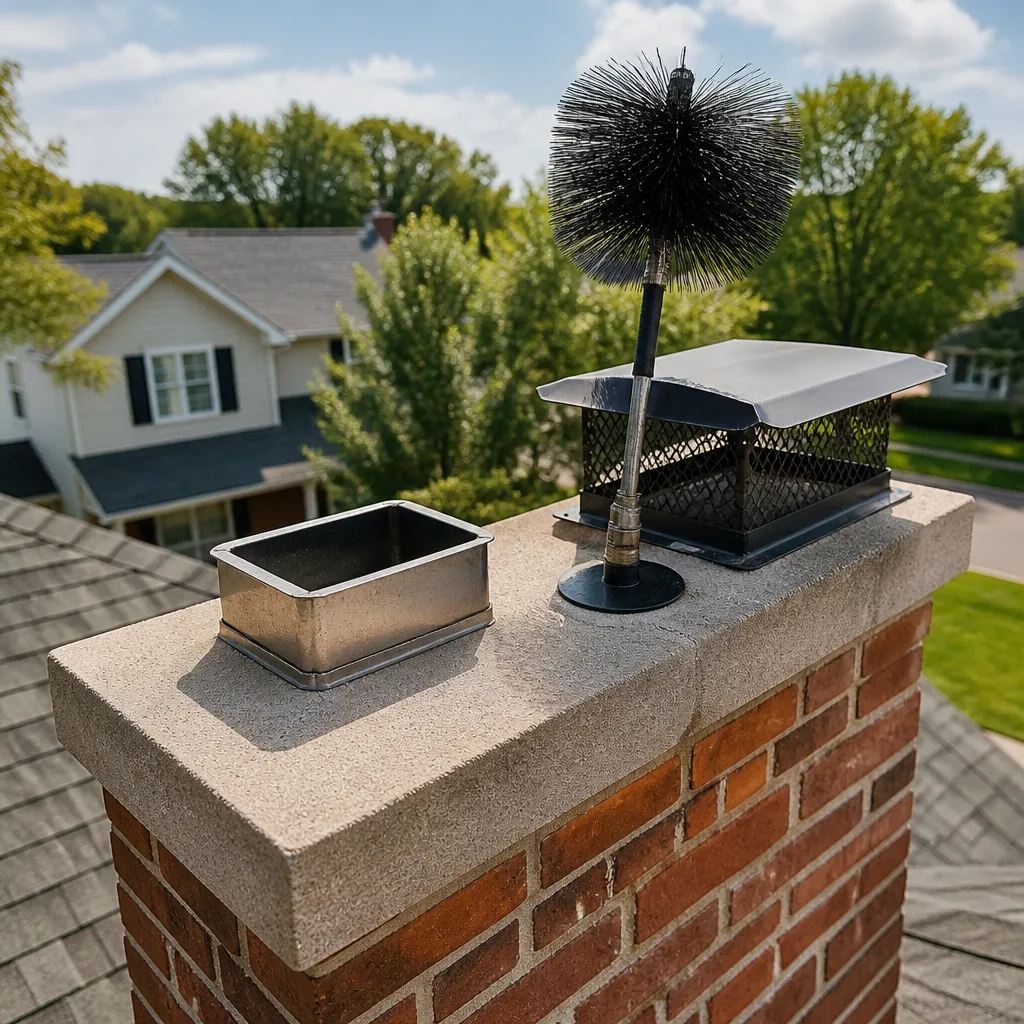 Sweep & inspection
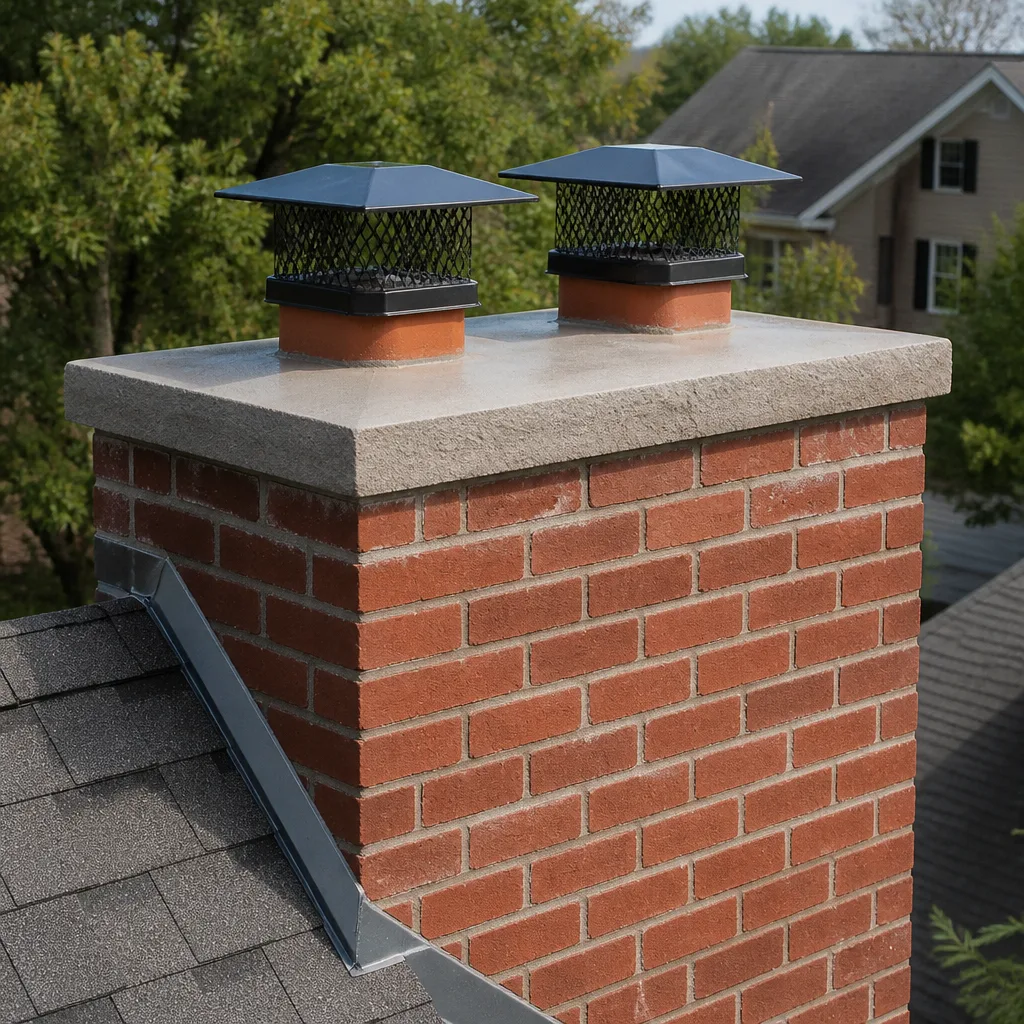 Caps & crowns
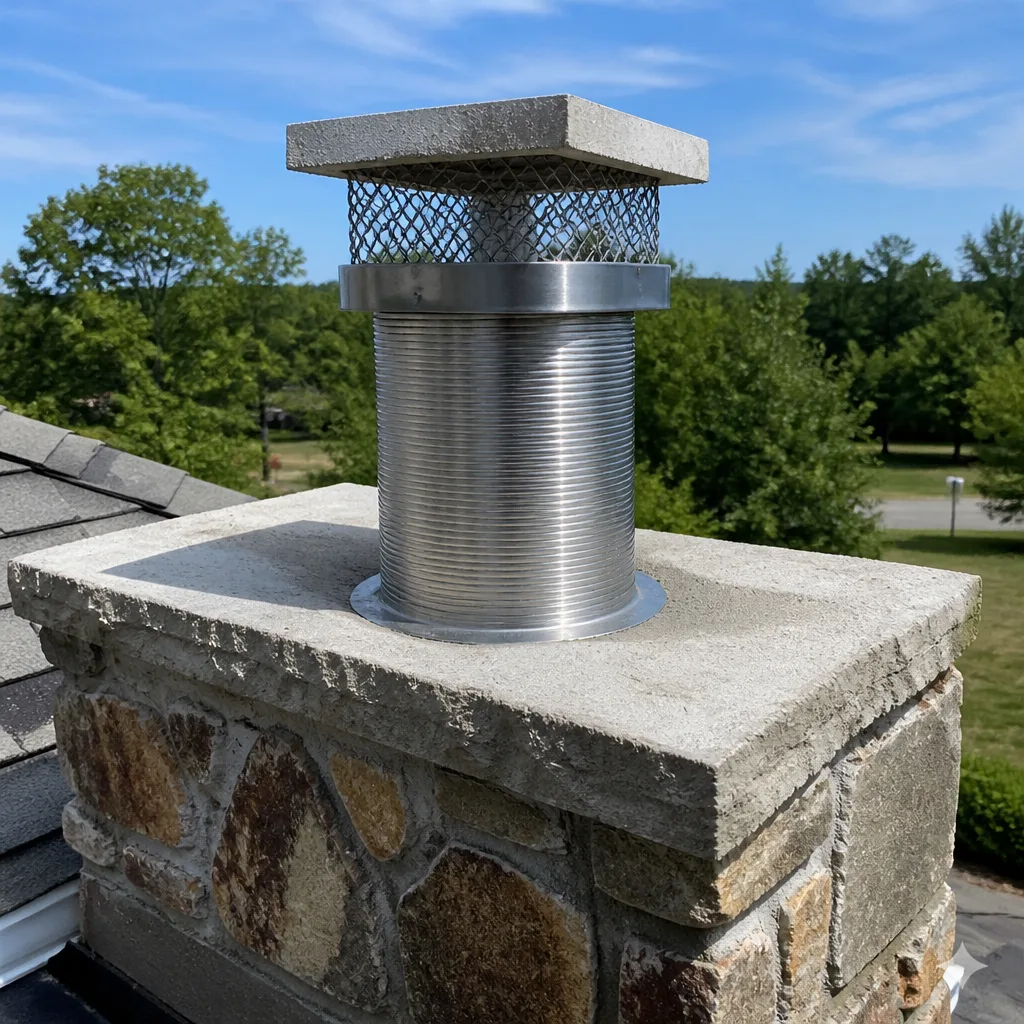 Flue relining
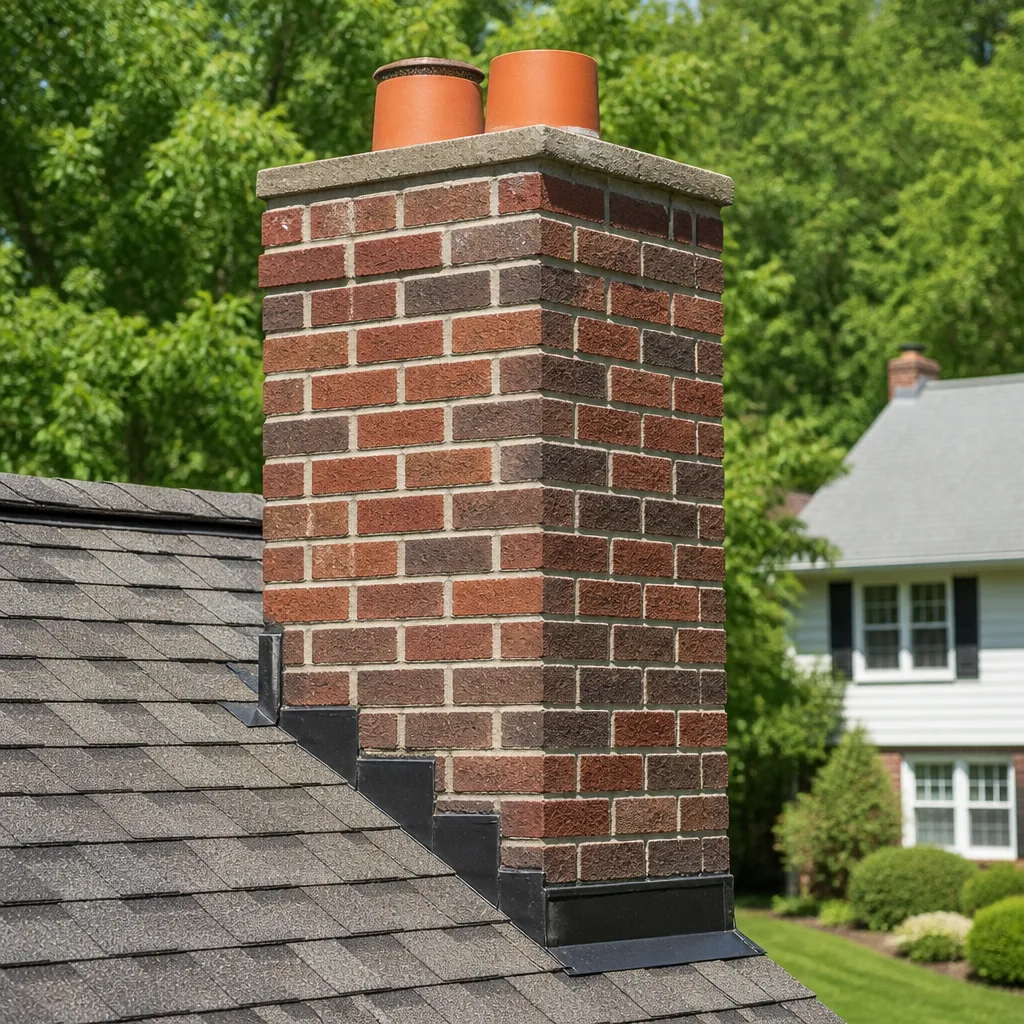 Masonry repair
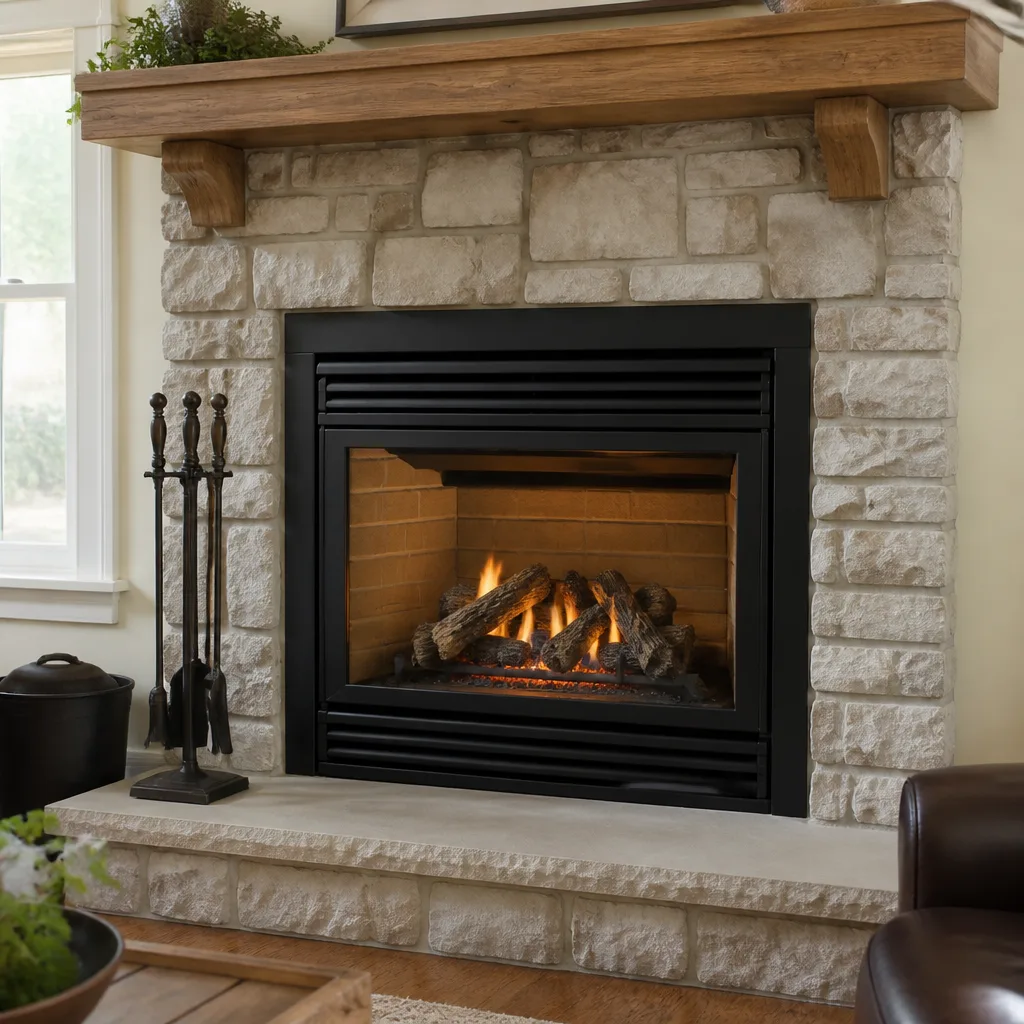 Gas fireplace service
Level 1 sweep and inspection to the NFPA 211 annual standard - flue, crown, cap, and flashing checked and photographed
Chimney sweep logs do not sweep chimneys. They loosen some creosote - which then falls where a brush and vacuum still have to collect it.
Chimney Cleaning Warning Signs: A Sedgefield Homeowner’s Reference Guide
Most chimney warning-sign lists tell you what to look for once something has already gone wrong. We take a different view. The signals that matter most are the quiet ones: a faint smoky smell in July, a damper that turns a little harder than it used to, a white chalky bloom spreading across the brick outside. A smoky smell in your living room on a hot, humid afternoon with no fire burning isn’t a reminder to book a cleaning. It’s often evidence of a draft reversal or a gap in the liner, and sweeping alone won’t fix either. This guide walks through the early, mid-stage and urgent signs a Sedgefield homeowner can catch on a Sunday morning without tools, and explains which ones a cleaning solves versus which point to real repair work.
Quick Answer
The most important chimney cleaning warning signs are a smoky odor in warm weather with no fire burning, white staining on exterior brick, creosote flaking into the firebox, slow-starting fires that used to draw well, and cracks in the firebox back wall. Early signs usually mean a sweep and inspection will tell you what’s going on; cracks, persistent smoke rollout and falling debris mean stop using the fireplace until a professional looks at it. The difference between a sign that cleaning fixes and one that signals structural repair is the whole point of this guide, and it’s something we sort out on every Sedgefield job before recommending anything.
Styles & brands we work with
- Sweep & inspection
- Caps & crowns
- Flue relining
- Masonry repair
- Gas fireplace service
Table of Contents
- Early-Stage Warning Signs Most Homeowners Dismiss
- Mid-Stage Signs That Need Prompt Service
- Urgent Signs: Stop Using the Fireplace
- Why Sedgefield’s Older Housing Stock Produces Its Own Warning Patterns
- Cleaning Versus Structural Repair: Which Fix Does Your Sign Need?
- A Seasonal Timeline for Sedgefield Chimneys
- A No-Tools Self-Check You Can Do This Week
- Common Mistakes to Avoid
Early-Stage Warning Signs Most Homeowners Dismiss
The earliest signs a chimney is drifting out of condition are easy to explain away. That’s exactly what makes them worth learning. When we inspect a Sedgefield chimney, these are the signals we most often find had been present for months before anyone called.
- A faint smoky smell in summer. On a hot, humid day with no fire burning, the chimney should smell like nothing much. A lingering smoke or creosote odor usually points to a draft reversal, a gap at the flue collar, or negative pressure pulling smells back down the flue. Cleaning helps if the flue is heavily loaded, but a gap or a short flue needs diagnosis, not just a brush.
- White staining on exterior brick. Chalky white bloom on the outside of the stack is what efflorescence looks like. Moisture is moving through the masonry and leaving mineral salts behind as it evaporates. It’s often the first outward sign that water is getting in past a failing crown or an uncapped flue, and it shows up long before interior damage does.
- A damper stiffer than it used to be. A damper that used to move freely and now takes effort, or sticks partway, is telling you about corrosion, soot buildup on the pivot, or heat distortion. It’s a small thing that points at a larger one. If the damper no longer seats properly, you’re losing heat up the flue when the fireplace is closed and losing control of the fire when it’s open.
- Soot smudges around the fireplace opening. Light grey streaks above or beside the surround suggest smoke is escaping at the face rather than going up the flue. Sometimes it’s a draft problem. Sometimes it’s a smoke chamber that’s deteriorated.
None of these early signs is a reason to panic. Each one is a reason to get eyes on the flue before the next burn season rather than after it. In Sedgefield, our wet winters and humid summers mean brick and mortar stay damp for long stretches, so moisture-driven problems tend to show up as these quiet exterior signs first.
Mid-Stage Signs That Need Prompt Service
Once warning signs move past subtle, they stop being maintenance reminders and start being scheduling decisions. The mid-stage signals below are the ones where we’d recommend getting on the calendar within a few weeks, not waiting out the season.
- Creosote flaking into the firebox. Flakes of dark, crusty material dropping down from the flue mean creosote has built to a stage where it’s shedding. Glazed, shiny creosote is worse than the fluffy kind because it’s harder to remove and it’s the form most associated with chimney fires. This is a sweep-now signal, not a check-later one.
- Fires that take longer to catch than they used to. If your fireplace used to draw well and now fights the kindling, the flue is telling you something changed. Partial blockage, a dislodged tile, or a heavy soot load can all restrict draft. We see this often in Sedgefield homes where the chimney hasn’t been swept in several seasons of regular burning.
- Discoloration above the fireplace opening. A brownish or blackened stain on the wall or mantel above the firebox usually means smoke is escaping the flue at the throat. It’s a sign that something in the smoke chamber or damper area is no longer sealing.
- A cap that’s missing, rusted or loose. An uncapped flue takes in rain, draws in birds and squirrels, and starts the moisture cycle that leads to white staining and cracked crowns. Cap and crown work is preventive, and it’s a lot cheaper than rebuilding a stack that’s taken on years of water.
- Rust on the damper or firebox hardware. Rust inside the firebox means moisture, not just age. It’s a reason to look at the crown, the cap and the chimney top before the rust spreads.
Mid-stage signs are the part of this guide most worth reading twice. They’re the point where a straightforward chimney sweep and a cap replacement solve the problem, and where waiting turns a cleaning into repair work.
Urgent Signs: Stop Using the Fireplace
Some warning signs are a stop sign. If you see any of the following, stop using the fireplace and get a professional inspection before you burn again. We’re specific about this because the consequences here are real: a cracked firebox or compromised flue can let carbon monoxide into the living space, and a damaged flue is where chimney fires start.
- Visible cracks in the firebox back wall. Hairline cracks in the firebrick or the back wall open as the fire heats up. Hot gas and carbon monoxide can find their way through those gaps into the wall cavity or the room.
- Persistent smoke rollout into the room. A bit of smoke on a cold start is normal. Smoke that spills into the room and stays there, fire after fire, is not. It means the flue isn’t drawing, and the reason could be a blockage, a broken tile, or a flue that’s undersized for the firebox. A smoke chamber that’s sharply corbeled or broken up can also cause this, and it’s a repair, not a sweep.
- Sounds of debris falling inside the flue. A soft thump after a fire is often nothing. Repeated sounds of material falling, or a shower of soot and grit when you open the damper, point to a cracked or spalled liner, or an animal nest breaking apart. Either way, the flue needs to be looked at before the next fire.
- A strong creosote smell indoors with no fire burning. Glazed creosote has a sharp, tarry smell. If you’re getting that smell in the room in warm weather, the flue has a heavy load and heat is loosening it. Stop burning and book a sweep.
- Smoke coming out of the chimney top into an adjacent window or vent. This usually means draft is being fought by something, and it’s worth a call to sort out why before you light up again.
Urgent signs are the whole reason we push inspection before the burn season. A sweep catches a heavy creosote load. An inspection catches the cracked tile, the smoke chamber that’s given up, and the crown that’s letting water in. Both are part of every job we do in Sedgefield.
Why Sedgefield’s Older Housing Stock Produces Its Own Warning Patterns
A large share of Sedgefield homes were built between the 1950s and the 1980s, and that vintage produces a specific set of chimney warning signs that newer construction doesn’t. Knowing the pattern helps you know what to check first.
- Clay liner shrinkage. Older clay tile liners were installed with mortar joints between each tile. Over decades of heating and cooling, those joints open as the tile shrinks and the mortar erodes. Gaps at the joints let creosote and moisture into the surrounding masonry, and they also let combustion gas past the liner. A camera inspection shows these gaps clearly, and a HeatShield ceramic resurfacing can often restore a jointed clay flue without a full reline.
- Deteriorating smoke chambers. In mid-century Sedgefield chimneys, the smoke chamber above the damper was often parged with a rough mortar coat. Over time, that parging spalls and breaks up. A broken smoke chamber is one of the most common reasons a fireplace that “used to work” now smokes into the room.
- Crowns at the end of their life. A chimney crown is the concrete cap on top of the stack. On older Sedgefield homes, crowns often show hairline cracking from years of wet winters and freeze-thaw. A cracked crown funnels water straight into the masonry, and that water is the leading cause of chimney deterioration we see.
- Original fireboxes with firebrick wear. Decades of fires wear down firebrick joints. Repointing and rebuilding the firebox with the right refractory materials is often the answer, and it’s a job that benefits from a specialist rather than a handyman.
- Chimneys that were never built for what’s in them now. Some older homes have had fireplace inserts or wood stoves added over the years. If the flue was never upgraded to match, the draft problem isn’t a mystery, it’s a mismatch. DuraFlex flexible stainless liners are what we install when the answer is a properly sized stainless flue.
Newer construction has its own warning signs, but they’re usually different: more prefab fireboxes and metal flues, fewer clay liner joints to worry about, and different moisture patterns. When we look at a chimney in Sedgefield, the house’s vintage tells us what to expect before we’ve climbed the roof.
Cleaning Versus Structural Repair: Which Fix Does Your Sign Need?
The single most useful thing you can take from this guide is knowing which warning signs a cleaning solves and which ones signal that structural repair is the real fix. Here’s how we think about it.
Signs a chimney sweep usually solves
- Creosote buildup on the flue walls, even heavy flaking creosote
- Soot on the damper, firebox and smoke shelf
- A smoky smell when the flue is loaded and a sweep clears it
- A slow-starting fire from soot load or a partial blockage at the top
Signs that point to structural repair
- Cracks in the firebox back wall or firebrick joints that keep opening
- Gaps at clay liner joints, visible on a camera inspection
- A smoke chamber that’s spalled or broken up
- A crown that’s cracked through, or a cap that’s missing or failed
- White staining on exterior brick, which means moisture is already inside the masonry
- Persistent smoke rollout into the room with a clean flue
The honest answer is that you can’t tell the difference from the living room. That’s why we do a camera inspection and photo report on every job, and why nothing is recommended without camera evidence you can see for yourself. When we find a jointed clay flue with open joints, we present the options: HeatShield ceramic resurfacing where the flue can be restored, and a DuraFlex stainless liner where full relining is the right call. When the fix is a crown or a cap, we quote that as a standalone job so you’re not paying for anything you don’t need. We use these materials because they’re the ones that hold up, not because we’re obligated to sell them.
A Seasonal Timeline for Sedgefield Chimneys
Warning signs show up in a predictable order through the year in Sedgefield, and knowing that order helps you schedule service at the right moment instead of the wrong one.
- Spring, after the last fire. Book the sweep now. The creosote load from the winter is still in the flue, the inspection is easier with a quiet house, and any repairs you need can be done before the burn season. Spring is also when exterior white staining is easiest to spot, because the wet winter has done its work and the brick is drying out.
- Summer, hot and humid. If a smoky smell develops indoors with no fire burning, that’s a draft reversal or liner gap, not a cleaning reminder. Book an inspection. This is also the season for moisture problems to show up on the inside of the chimney, since the outside stays damp and the inside stays cool.
- Early fall, first cool evenings. The first genuinely cool week arrives, homeowners go to light the first fire of the season, and a fraction of them discover the chimney isn’t ready. Slow-starting fires, smoke rollout and rusted dampers all surface here. If you haven’t had a sweep since spring, this is the point to get one before the fire that reveals a problem also causes one.
- Winter, peak burn season. This is when heavy creosote builds fastest, because fires burn hotter and longer. If you see creosote flaking into the firebox mid-season, stop and book a sweep. It’s also when caps and crowns take the most water.
- Late winter, the last fires. If the fireplace has been burning hard all winter, this is a good moment for a mid-season inspection, especially if you’ve noticed any of the mid-stage signs.
The one thing we’d ask is that you don’t wait for a symptom to decide. A sweep and inspection before the burn season, done by a specialist who handles the sweep, the camera inspection and any repair, means fewer surprises on a cold evening. That’s the seasonal rhythm for Sedgefield, and it’s why our spring calendar fills before the summer does.
A No-Tools Self-Check You Can Do This Week
You don’t need any tools or a ladder to catch the early warning signs a Sedgefield homeowner should be looking for. Here’s the walkaround we’d suggest, and it takes about ten minutes.
- Look at the fireplace opening from across the room. Any soot streak or brown stain above the opening? Note it. It’s a clue about smoke escaping the flue.
- Check the back wall of the firebox. Use a flashlight and look for cracks, missing mortar in the joints, and any crumbling firebrick. If you find cracks, stop using the fireplace until a professional has looked at it.
- Move the damper. Does it move smoothly, and does it close fully? If it feels stiff or won’t seat, make a note.
- Smell the fireplace with no fire burning. A faint smoky smell on a warm day is worth a mention when you book. A strong, sharp creosote smell is a book-now signal.
- Go outside and look at the chimney from the ground. White staining on the brick? Missing or rusted cap? Cracked crown at the top? Loose or missing mortar joints? You don’t need to climb anything to see these.
- Listen when you open the damper. A trickle of soot is normal. A shower of material, or sounds of something loose falling in the flue, needs a call.
If you find anything in that walkaround that concerns you, the next step is a proper sweep and inspection. That’s a Chimney Sweep Sedgefield visit, and it’s always better to have the inspection with plenty of time before the next fire season rather than the evening of the first cold snap.
Common Mistakes to Avoid
- Treating a smoky smell in summer as a cleaning reminder. A smoky smell with no fire burning is usually a draft reversal, a gap at the flue, or negative pressure. A sweep alone won’t tell you which, so ask for an inspection with camera evidence, not just a brush.
- Assuming low-bid sweeps are all the same job. A sweep who brushes the flue and leaves without a camera inspection can’t catch the cracked tile or the broken smoke chamber. In Sedgefield, a lot of the older homes have a clay liner that looks fine at the bottom and has open joints higher up.
- Covering up cracks rather than fixing them. Patching a crack in the firebox back wall without addressing why it opened is a one-season fix. High-temp sealant won’t hold where firebrick and joint repair is what’s needed.
- Letting a missing cap go. An uncapped flue pulls in rain, birds and squirrels and starts the moisture cycle that leads to white staining and crown cracking. A cap is a cheap, permanent fix compared with rebuilding a water-damaged stack.
- Ignoring white staining on the outside brick. Chalky bloom is moisture moving through the masonry. If it’s there, the crown and flashing need checking now.
- Waiting for the first cold week to book. By then, the problem has announced itself, and the calendar is stacked with homeowners who did the same thing. Book the sweep in spring and the inspection is calmer.
- Splitting a repair between two vendors. If the sweep says “get a mason to look at that crown,” the diagnosis and the repair have been split. We do the sweep, the inspection, the liner work and the masonry repair in one company, so nothing falls between the cracks.
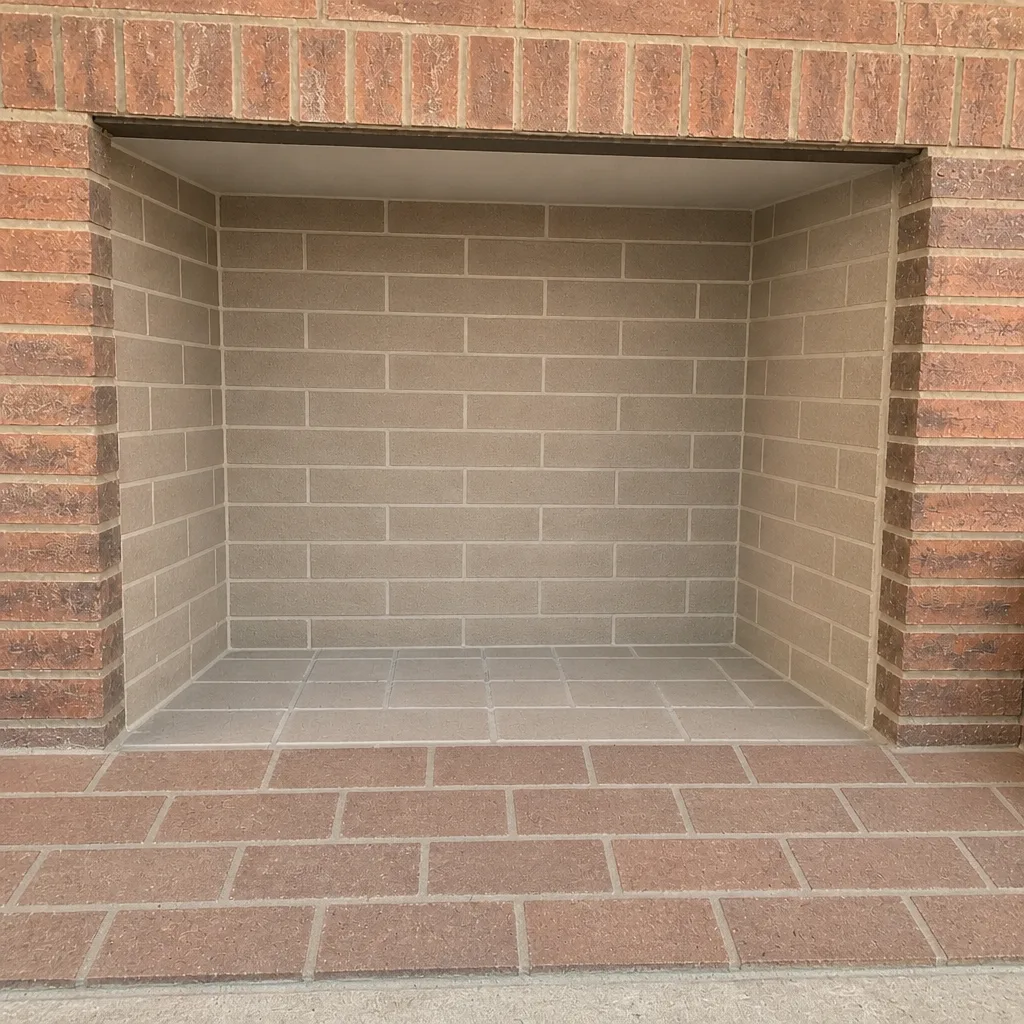
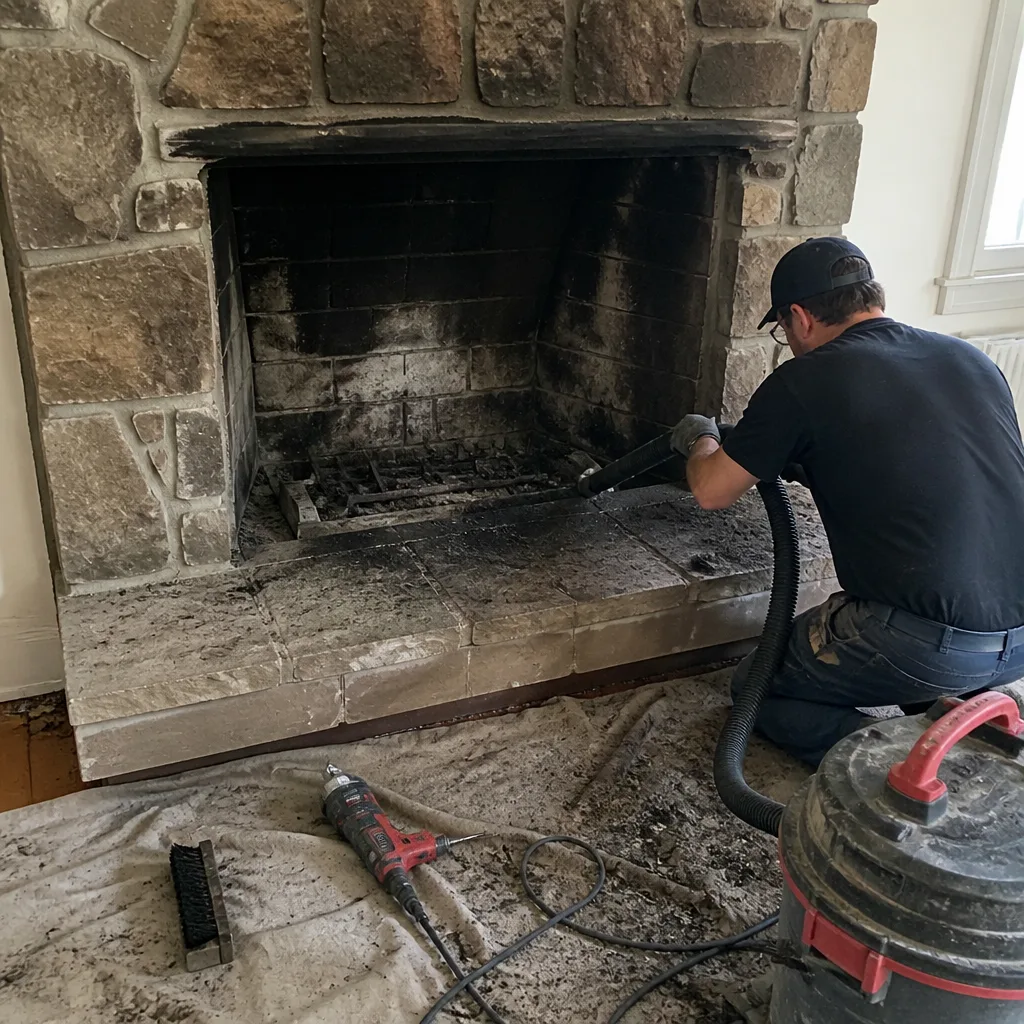
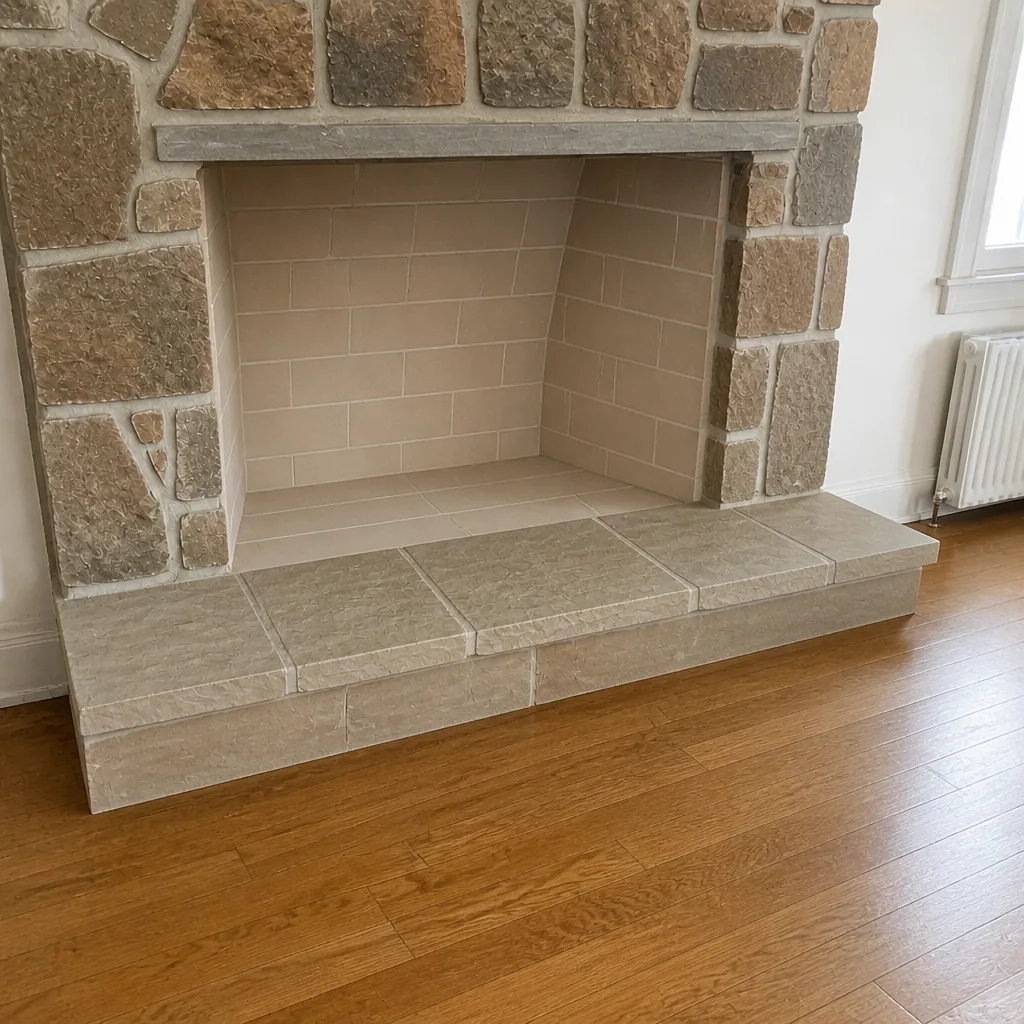
See the difference
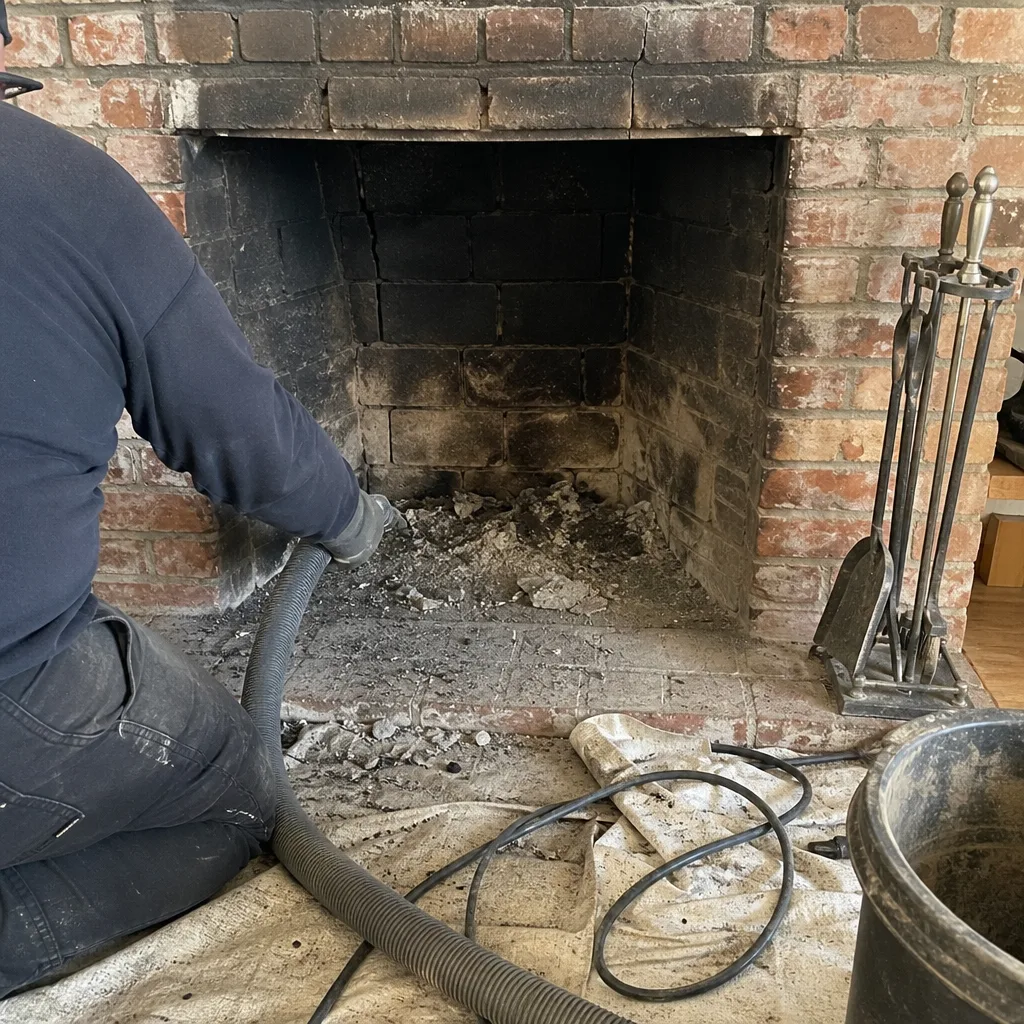 Before
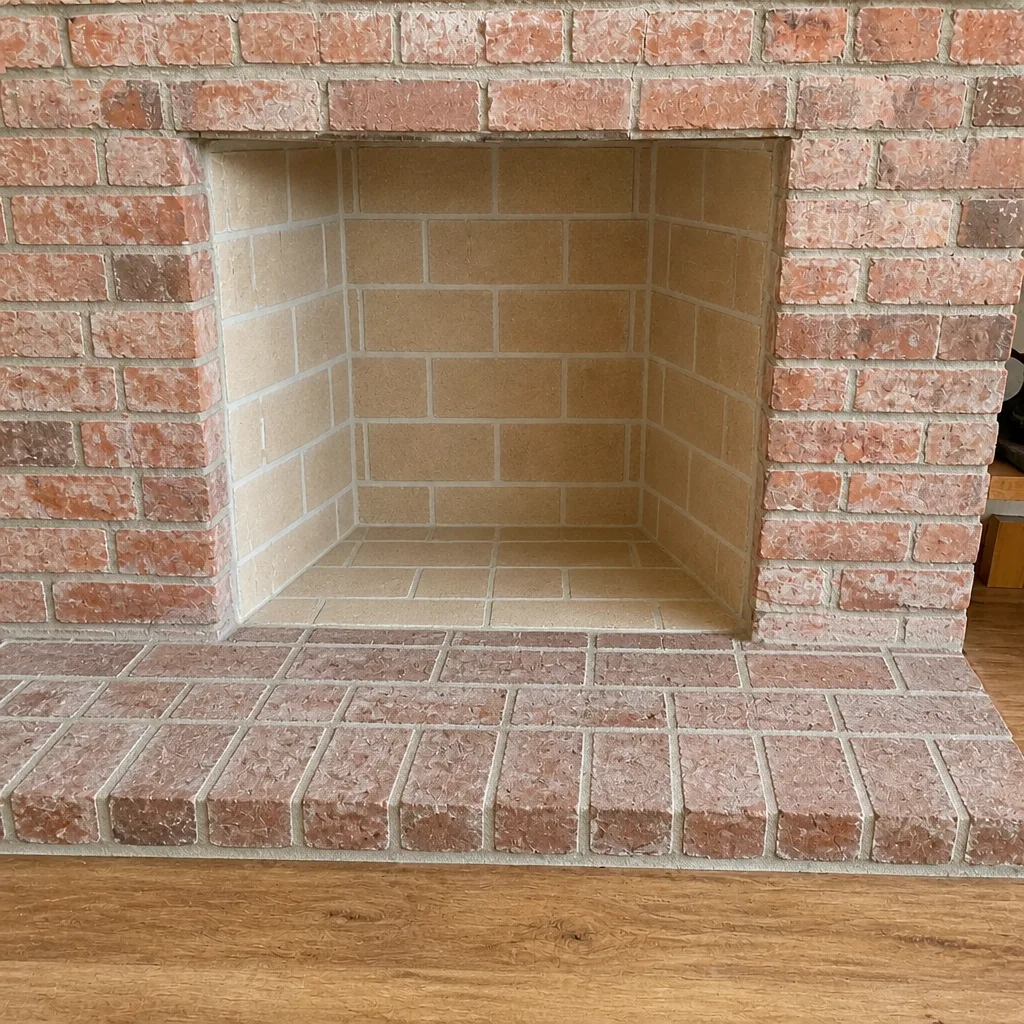 After
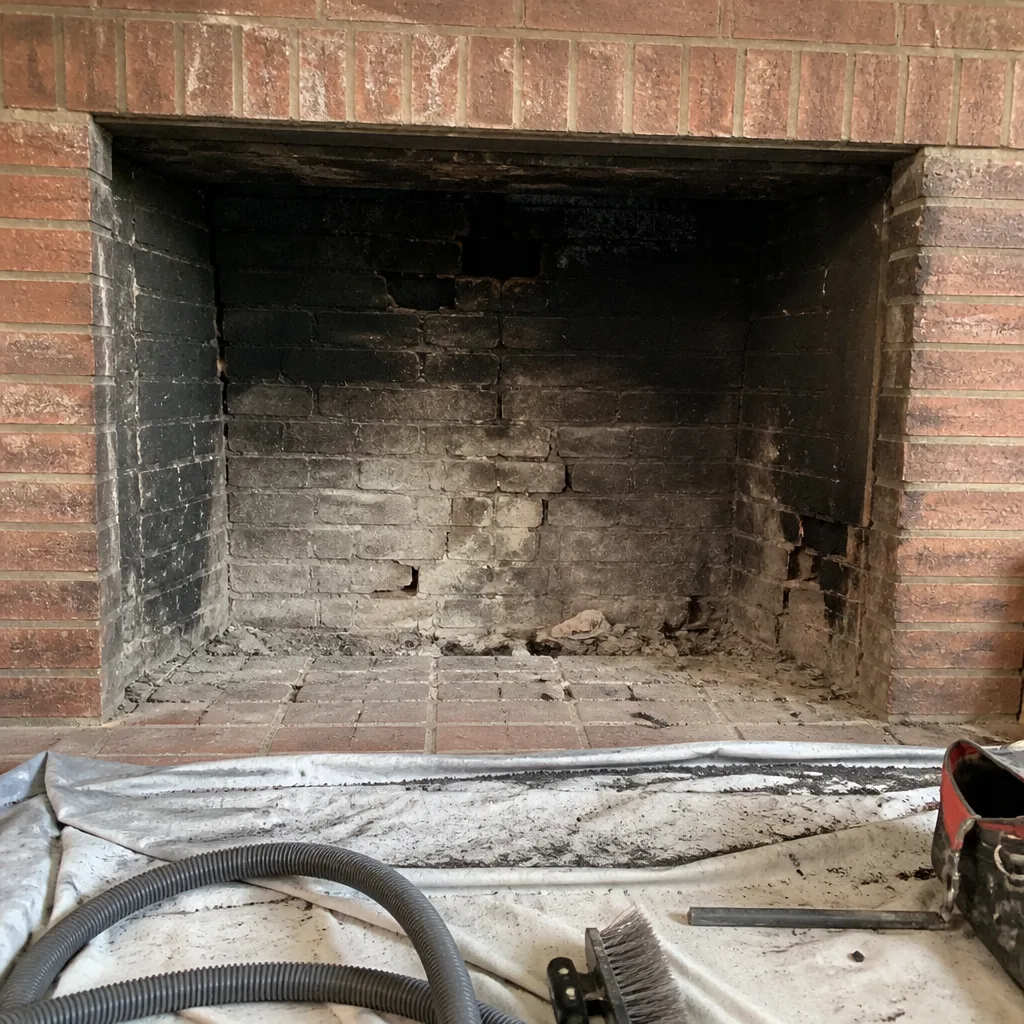 Before
 After
 Before
 After
When to Call a Professional
Call a professional if you’ve found cracks in the firebox back wall, gaping joints in the visible firebrick, or persistent smoke rollout into the room. Call if you hear debris falling inside the flue, if creosote is flaking into the firebox, or if a smoky smell lingers indoors in warm weather. Call if there’s white staining on the exterior brick, a missing or rusted cap, or a crown that’s cracked through. And call if your fireplace used to draw well and now doesn’t, because a change in behavior is always a signal. Chimney Sweep Sedgefield offers free estimates in Sedgefield. Call (855) 726-7779. We answer 24/7. Fast dispatch from 7am to 7pm, Sunday through Friday. Our technicians have up to 9 years of experience, and every job includes a camera inspection and photo report so you can see exactly what we’re seeing.
Frequently Asked Questions
The earliest signs are a faint smoky smell in summer with no fire burning, white staining on exterior brick, a damper that’s stiffer than it used to be, and light soot smudges above the fireplace opening. None of these means the chimney is in immediate danger. They mean a sweep and inspection should happen before the next burn season, so the diagnosis is made early rather than late. Call (855) 726-7779 for an exact quote on a sweep and inspection – estimates are free.
A chimney should typically be swept once a year if you use the fireplace regularly, and more often if you burn a lot or notice creosote buildup. If you only burn a few fires a season, an annual inspection is still worth doing. In Sedgefield’s older homes with clay liners, the inspection matters as much as the sweep, because it’s the only way to see joint gaps and smoke chamber damage. Call (855) 726-7779 to book a sweep and inspection – estimates are free.
No. A smoky smell indoors in warm weather with no fire burning usually points to a draft reversal, a gap at the flue, or negative pressure in the house, not a heavy soot load. A sweep alone won’t fix it. You need an inspection to find the actual cause, and the fix could be as simple as a flue cap or as involved as a liner repair. Call (855) 726-7779 for an exact quote on an inspection – estimates are free.
Most of the time it can be repaired, and that’s something we start by looking at rather than assuming. When the clay flue is intact but the joints are opening, HeatShield ceramic resurfacing can often restore it without a full reline. When the flue is broken through, spalled, or undersized for the fireplace, a DuraFlex stainless liner is the right answer and it’s built to last. We only recommend the repair the camera evidence supports. Call (855) 726-7779 for an exact quote – estimates are free.
A heavy creosote load raises the risk of a chimney fire, and a cracked flue or firebox lets combustion gas into your living space. Those are the two serious risks, and neither is worth finishing the season for. If you see mid-stage or urgent signs, stop using the fireplace until you’ve had a professional out. Call (855) 726-7779 for an exact quote – estimates are free.
No, we’re closed Saturday. We’re open Sunday through Friday, 7am to 7pm, so Sunday is the day to book if the week doesn’t work for you. Call (855) 726-7779. We answer 24/7. Fast dispatch from 7am to 7pm, Sunday through Friday.
Creosote buildup, soot on the damper and firebox, and a smoky smell that clears with a sweep are cleaning problems. Cracks in the firebox back wall, open joints in the clay liner, a deteriorated smoke chamber, a cracked crown and white staining on exterior brick are structural repair problems. The way to tell them apart is a camera inspection with photo evidence you can look at yourself. Call (855) 726-7779 for an exact quote – estimates are free.
The Bottom Line
The warning signs that matter in Sedgefield are the early ones: a smoky smell in warm weather, white staining on the outside brick, a damper that moves differently than it used to. They show up weeks or months before a chimney becomes genuinely dangerous, and they’re the kind of thing you can catch without any tools. When they cross into mid-stage or urgent territory, stop and get a professional out. The single best move is a sweep and inspection before the burn season, from a company that handles the sweep, the camera inspection and any repair all the way through. That’s the chimney cap & crown and fireplace repair work rolled into one chimney sweep visit. Nothing we recommend is based on guesswork, only on camera evidence you can see. Call Chimney Sweep Sedgefield at (855) 726-7779 for a free estimate. We answer 24/7. Fast dispatch from 7am to 7pm, Sunday through Friday.
Written by the team at Chimney Sweep Sedgefield.