
Last updated November 25, 2026
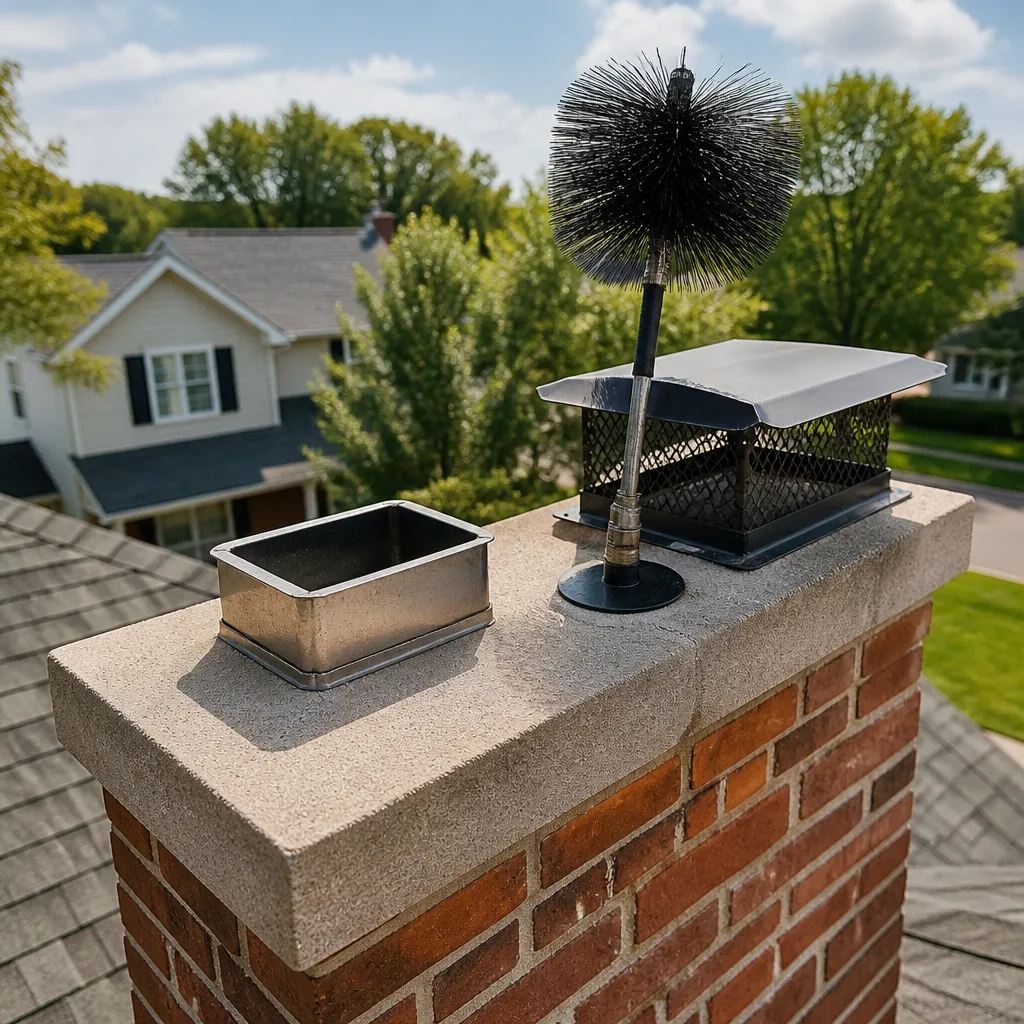 Sweep & inspection
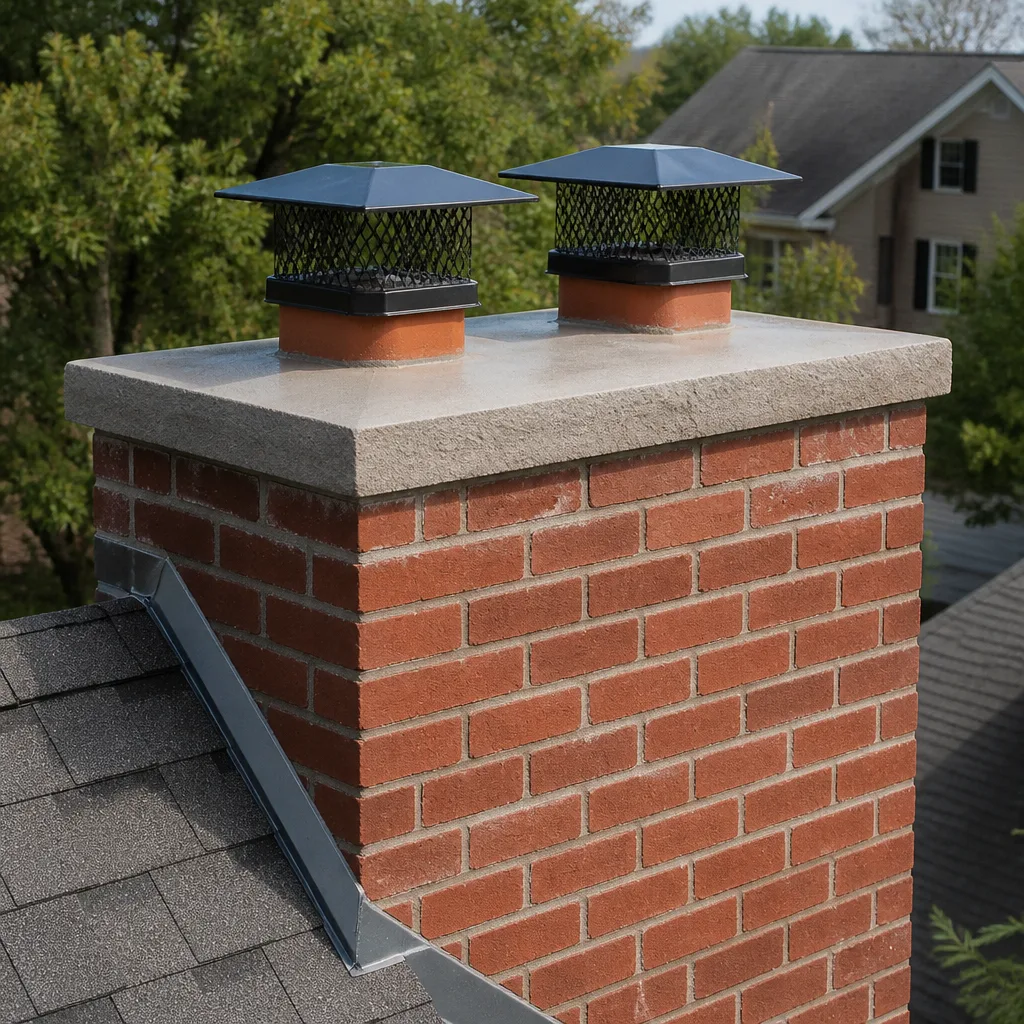 Caps & crowns
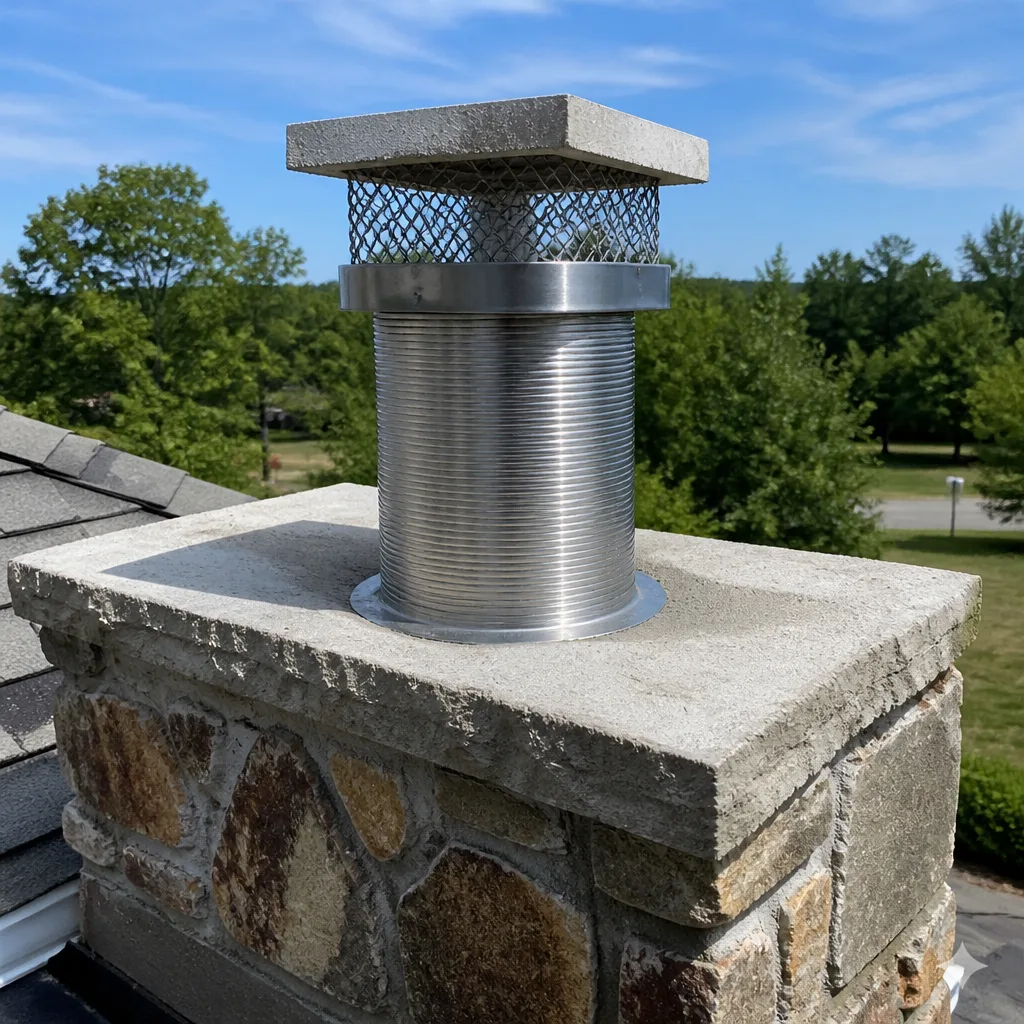 Flue relining
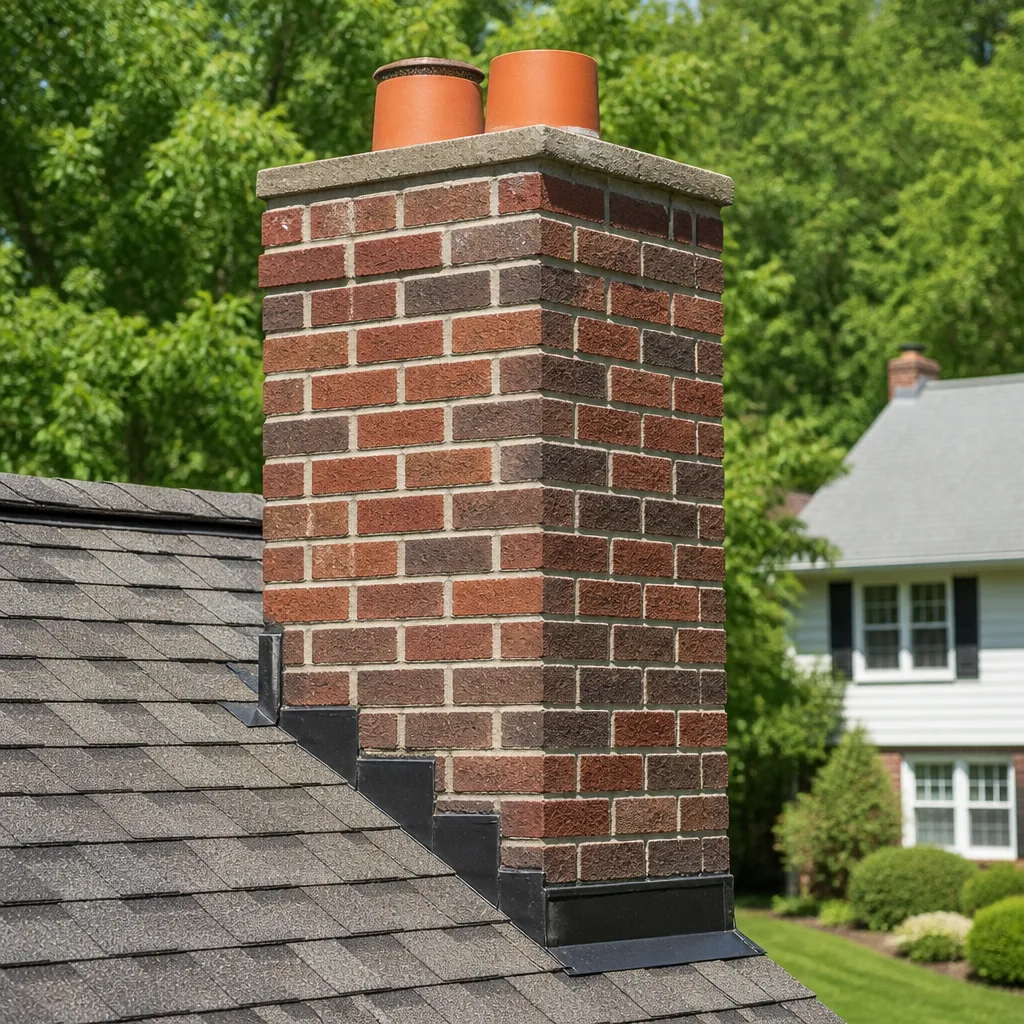 Masonry repair
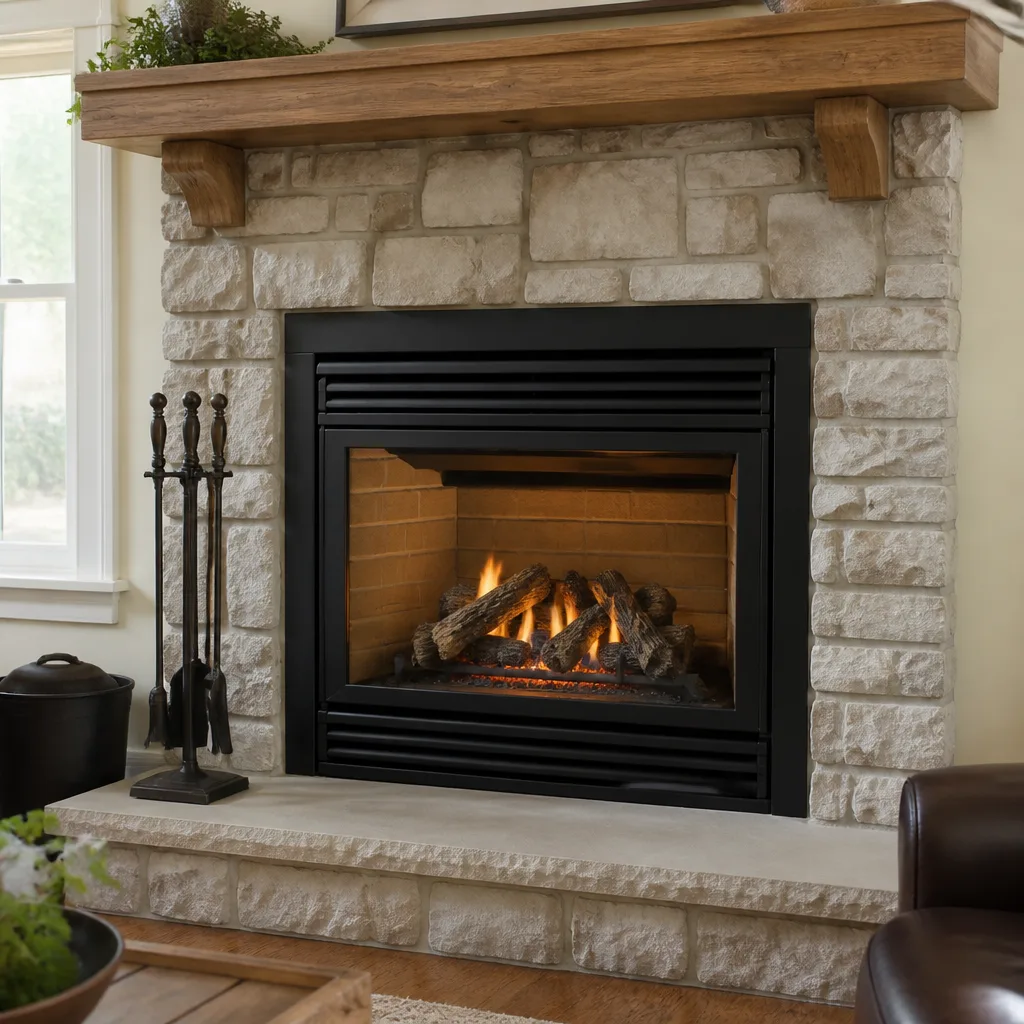 Gas fireplace service
Level 1 sweep and inspection to the NFPA 211 annual standard - flue, crown, cap, and flashing checked and photographed
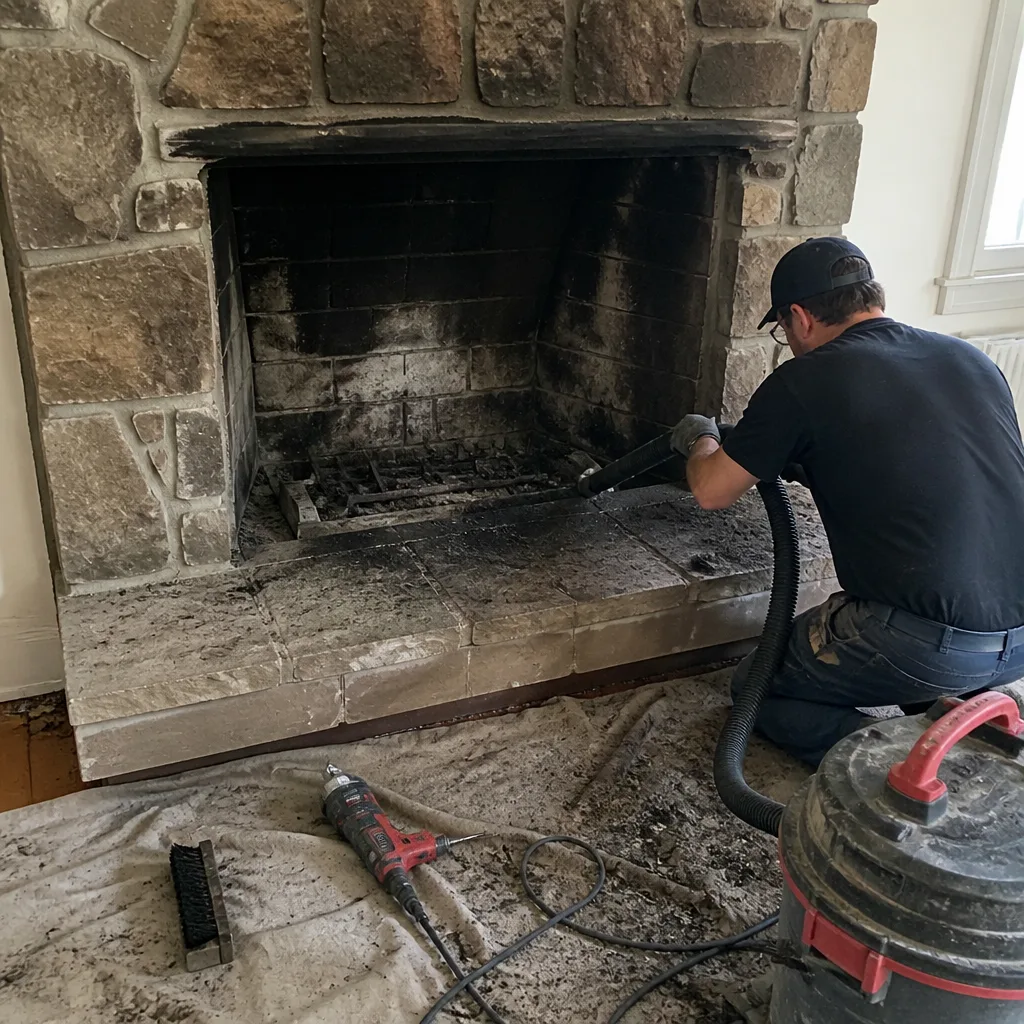
Chimney sweep logs do not sweep chimneys. They loosen some creosote - which then falls where a brush and vacuum still have to collect it.
The Complete Guide to Chimney Cleaning in Sedgefield
Most chimney guides tell you to sweep once a year and call it done. In Sedgefield, that advice is incomplete. Our summers run humid, our winters are mild but damp, and pine pollen settles over everything for weeks each spring. Creosote behaves differently in that kind of climate, and what “clean” means at the start of the burning season is not what it means in February. This guide walks through your flue month by month, explains the three inspection levels and which one actually applies after a typical North Carolina winter, and shows you how to read your own firebox so you know when to call before the season ends.
Quick Answer
Chimney cleaning in Sedgefield means removing creosote, soot and blockages from the flue, then checking the liner, smoke chamber and cap condition – not just brushing the firebox. In this climate, many homes need the flue swept once a year and the cap and crown inspected seasonally, and homes that burn softwood or burn often may need attention sooner. A proper cleaning ends with a camera inspection and a written report so you can see the condition of the flue yourself.
Styles & brands we work with
- Sweep & inspection
- Caps & crowns
- Flue relining
- Masonry repair
- Gas fireplace service
Table of Contents
- Why Sedgefield’s Climate Changes the Sweeping Schedule
- How Creosote Forms in a Damp Climate
- Level 1, Level 2 and Level 3 Inspections Explained
- What a Full-Service Cleaning Covers
- How Your Fuel Choice Drives Cleaning Frequency
- How to Read Your Firebox After a Fire
- A Month-by-Month Look Inside Your Flue
- When to Call a Professional
- Common Mistakes to Avoid
- Frequently Asked Questions
Why Sedgefield’s Climate Changes the Sweeping Schedule
Sedgefield sits in a stretch of the North Carolina Piedmont where humidity holds through much of the year. That matters inside your chimney because water vapor is creosote’s accomplice. When a flue stays damp between burns, glazed creosote – the hard, shiny stage that is far harder to remove – can develop faster than it does in drier parts of the country. The national one-eighth-inch rule that most guides quote is a good floor, but it does not tell you everything about what is happening on the inside of the flue walls here.
Three local conditions push the schedule:
- Humid summers. Warm, moist air settles in a cold flue in the off-season. The moisture softens soot on the liner and lets it bond into the masonry pores, so the first burn of the season has more to work with than you’d expect.
- Mild, damp winters. Long stretches of forty-degree weather mean the fire runs low and smolders. Cool flue temperatures are the number one cause of creosote buildup, because smoke has more time to condense before it exits the top.
- Heavy pine pollen in spring. The same pollen that coats cars coats chimney caps, screens and spark arrestors. A clogged screen does not stop a sweep, but it does change how draft behaves all summer, and by fall you can have a cap full of compacted pollen and debris.
Put together, these mean a Sedgefield chimney is not simply “dirty” or “clean” at the end of a season. It accumulates in layers, and the layers differ year to year. That’s why a real inspection with a camera matters more here than a quick brush and a glance up the flue. If you only take one thing from this guide, take this: your chimney is a machine that lives outdoors, and in Sedgefield it runs in a wetter environment than a guide written for Minneapolis or Denver assumes.
How Creosote Forms in a Damp Climate
Creosote is the condensed product of wood smoke. When smoke moves up a flue and the walls of the flue are cool, volatile compounds in the smoke stick to the surface and polymerize. Over time that forms the familiar black, crusty layer inside the flue. It comes in three general stages, and knowing them explains why the same chimney problem looks different on your neighbor’s house than on yours.
- Stage 1 – soot and flaky creosote. The easiest to remove with standard brushing. Most chimneys sit here after a normal season of well-seasoned hardwood.
- Stage 2 – glazed and bonded creosote. A denser, shinier layer that bonds to the liner or masonry. Brushing alone struggles. This stage develops faster in Sedgefield’s humid air because condensation forms on a cooler flue.
- Stage 3 – the hard glaze. The most advanced form, which can look almost like a varnish and is the hardest to remove. This is where restoration products earn their place.
In practical terms, this is why the standard one-eighth-inch threshold can mislead. By the time stage 2 creosote has bonded to a clay tile, brushing may take the surface off but leave the liner damaged underneath. That’s where our approach differs: we use HeatShield ceramic resurfacing when a clay flue tile is pitted or cracked but structurally intact, restoring the flue surface instead of replacing the entire liner. We come back with a camera inspection and show you the before and after so you can decide for yourself what step is warranted.
Cracked flue tiles are not the same as a fire hazard on their own, but a cracked tile lets creosote and moisture work into the masonry behind it and can allow exhaust gases to escape into the structure. That’s one of the reasons we position chimney repair alongside routine cleaning – a sweep that ignores the liner is only half a job.
Level 1, Level 2 and Level 3 Inspections Explained
The Chimney Safety Institute of America defines three inspection levels. The level you actually need depends on what changed since your last inspection. In Sedgefield, a typical NC winter followed by a dormant summer usually points to one level more than another. Here is how the levels break down and when they apply.
Level 1 Inspection
A Level 1 inspection covers the readily accessible portions of the fireplace and flue: the firebox, damper, smoke chamber, flue throat and the visible portions of the flue. It is the right level for a chimney still in regular use with no changes to the system since the previous inspection. Most of our annual sweep customers begin here. It is fast, unobtrusive, and catches the obvious problems before they become expensive.
Level 2 Inspection
A Level 2 inspection adds a video camera run through the entire flue, and it applies after any change to the system: a chimney fire (even a small one), a new appliance or firebox insert, a change in fuel, a major storm, an earthquake, or a new home purchase. If you’ve just bought a house in Sedgefield and don’t know the history of the chimney, this is the one you want. Most problems that surprise homeowners are found at Level 2 and missed at Level 1 because the camera sees what the eye cannot.
Level 3 Inspection
A Level 3 inspection is diagnostic and invasive. It means opening walls or removing components to access concealed parts of the system. It’s called for when a Level 2 inspection reveals a hidden problem that can’t be evaluated otherwise. It’s the least common of the three, and it should never happen on a routine sweep. Ask first if someone recommends Level 3 work; we always explain why it is required in writing.
In our experience, Sedgefield homes tend to land in Level 1 for maintenance and Level 2 after a heavy-burn winter or a home purchase. We follow the CSIA’s standard camera inspection with a photo report so you have a record of the flue’s condition. That record is more valuable than a verbal assessment, especially when comparing what happened from one year to the next.
What a Full-Service Cleaning Covers
A full-service cleaning is not just a brush run. It covers every part of the system that can affect safe operation, including components a discount sweep tends to skip. Here’s what we check on every visit.
- Firebox and damper. Creosote can collect under the damper and in the corners of the firebox. A brush alone often misses this. We use hand tools on the firebox so the metal and refractory panels are checked for cracks or deterioration.
- Smoke chamber. A domed chamber sits above the damper, and its sloped surfaces collect the most creosote of any part of the system. It’s frequently missed at a discount sweep.
- Flue and liner. Full-length brushing of the flue, with a camera inspection after the sweep so we can look for pitting, cracking, or the first signs of glued-in creosote a brush cannot pull off.
- Chimney cap and screen. A cap that is rusted, missing a screen, or bent out of shape lets water into the flue. Cap condition is one of the most overlooked parts of a “clean.”
- Crown. The concrete crown at the very top of the chimney sheds water. A hairline crack in the crown is the most common entry point for water in Sedgefield chimneys.
- Exterior masonry. A visual pass on the brickwork and mortar to spot deteriorated joints before they become expensive.
That is why we position our chimney cap & crown work as a specialty rather than an add-on. The cap and crown are the two points most likely to admit water, and water is the leading cause of chimney deterioration we find in Sedgefield. When a cleaning flags a bad cap or a cracked crown, we show you the photograph and give you a written option to fix it, repair it, or leave it if it can safely wait.
How Your Fuel Choice Drives Cleaning Frequency
What you burn determines how fast creosote forms. This is one of the most direct levers a Sedgefield homeowner has over their own chimney’s health, and it’s worth being specific about.
Hardwoods like oak, hickory and maple, when properly seasoned, produce less creosote because they burn hotter and cleaner. Softwoods like pine burn fast and cool, and they leave more creosote behind. Many Sedgefield properties have easy access to pine, whether from a fallen limb or a cord purchased locally, and it’s a common shortcut for the first fire of the year. That single habit can move you from stage 1 to stage 2 faster than anything else.
Seasoning matters more than species. Wood that has cured for at least a full year and reads low on a moisture meter burns clean; wood that is still green sends water vapor up the flue and cools it down, which is exactly the condition that accelerates creosote. In Sedgefield’s humidity, split wood stacked on the ground absorbs moisture even after a summer of curing. Getting it off the ground and under cover helps.
Practical rules of thumb for local homeowners:
- If you burn hardwood and have a proper draft, an annual sweep is generally correct.
- If you burn a heavy mix of softwood, or burn often through a long season, plan on a sweep once a year and a mid-season cap check at minimum.
- If you use the fireplace for ambience a handful of times a year, you still need a sweep; the interval can often be longer, but a Level 2 inspection at purchase is worth doing.
None of this replaces an actual inspection. The point is that “once a year” is a starting point, not a rule. Your technician should look at the flue at the end of the season and tell you whether the interval for your specific home should be shorter or can be longer.
How to Read Your Firebox After a Fire
You can learn a lot about the condition of your chimney just by looking at the firebox after it has cooled. None of this replaces a sweep, but it tells you when to pick up the phone. Here’s what to look for after a fire, in order of how much it should concern you.
- Look at the back wall of the firebox. Uniform light soot is normal. Glossy, shiny black patches on the firebrick are a sign of glazed creosote, which means a brush-only sweep will not remove it.
- Look at the damper. A damper that doesn’t fully close, sticks, or sits at an odd angle can let heat and smoke escape into the room or let cold air enter in the off-season. If it’s been hard to move for a while, mention it on your call.
- Look at the mortar joints. Crumbling mortar at the firebox edges is a sign of age or of moisture damage. It’s a repair item, not a sweeping one, but it should be caught early.
- Smell the room the morning after. A persistent smoky smell the next day can mean a drafting problem, a partially blocked screen, or a firewood load that was too damp. It’s worth a diagnostic sweep with camera inspection.
- Watch your fire’s behavior. A fire that starts easily and draws well is a good sign. A fire that smokes, dies out, or puffs smoke into the room while burning is telling you something is obstructing the flue.
If you check any two of these and something looks off, the fastest way to know for certain is a professional sweep with a camera inspection. If everything looks clean, an annual sweep still makes sense, but you can breathe easier knowing what you’re looking at.
A Month-by-Month Look Inside Your Flue
Chimney care in Sedgefield is easier to think of as a year-round rhythm than as a single appointment. Here is how we think about the season, in plain language.
- Spring (March-May). Pine pollen lands on caps and screens. If your cap is bent or missing a screen, pollen and seed pods get in. This is a good time to book a post-season sweep so the flue spends the humid summer clean instead of accumulating.
- Early summer (June-July). Humid air settles in the flue. A cap that is failing begins to let water into the crown and masonry. Walking around the outside of the chimney once and looking at the crown is worth doing.
- Late summer (August-September). The best time to book your seasonal sweep. The flue is empty and scheduling is easier than at the last cold snap.
- Fall (October-November). First fires go up. A cold flue with a clean chimney drafts well. A cold flue with a dirty one backs up smoke. If you missed the late-summer sweep, do not skip this one.
- Winter (December-February). Heavy burn. Softwood burn and low fires both thicken creosote. Check the cap after a stretch of wind and rain.
- Year-round. Watch the firebox after each fire and take note of anything that changes.
As a specialist company we handle the sweep, the inspection, the cap and crown work, and the repair – the whole chain – so you’re not coordinating a sweep vendor and a mason on your own. When something turns up at the camera inspection, the person who diagnoses is the person who quotes the fix. That’s what we mean when we talk about one team from inspection through final repair.
Common Mistakes to Avoid
- Treating the national one-eighth-inch rule as the whole story. It’s a floor, not the answer. In Sedgefield’s humidity, glued-in creosote can be present well before the flue reads as heavily soiled.
- Choosing a sweep that skips the liner check. A discount sweep often brushes the firebox and leaves the liner to chance. Ask directly whether the sweep includes a camera inspection and a photo report.
- Burning unseasoned wood for the first fire. Green wood cools the flue and sends moisture up it. It is the fastest way to move a clean chimney toward glazed creosote over a season.
- Ignoring the cap after the spring pollen drop. A partially blocked screen changes draft and starts a slow deterioration at the crown.
- Treating a small chimney fire as nothing to worry about. Any event where the chimney makes unusual roaring sounds or flames come out of the top warrants a Level 2 inspection with a camera before the next fire.
- Assuming a cracked tile means a full reline. It often doesn’t. HeatShield resurfacing can restore a pitted or cracked clay flue when the structure is intact, and it saves the kind of cost that often gets quoted for a replacement.
- Skipping a Level 2 inspection on a newly purchased home. You don’t know the history of the flue, and the previous owners might not have either. One camera inspection at purchase gives you a baseline for years.
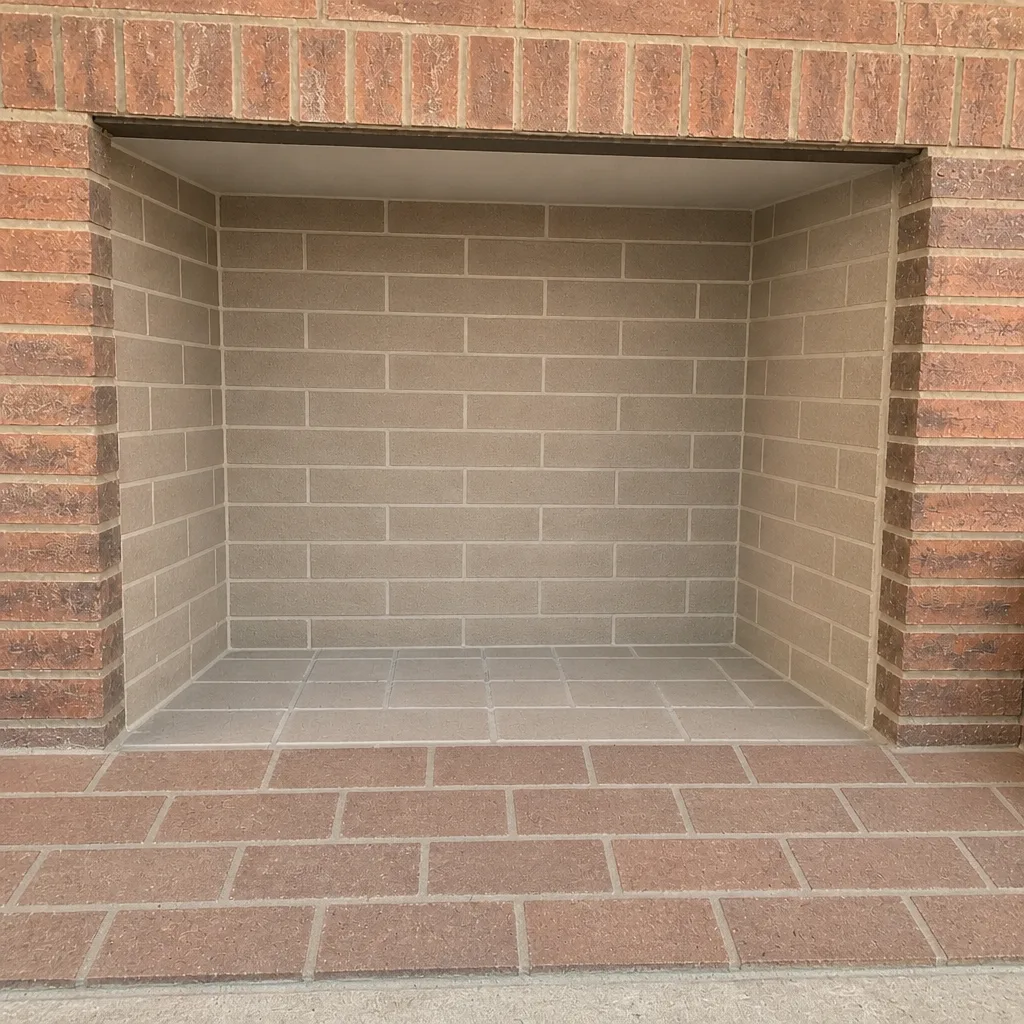
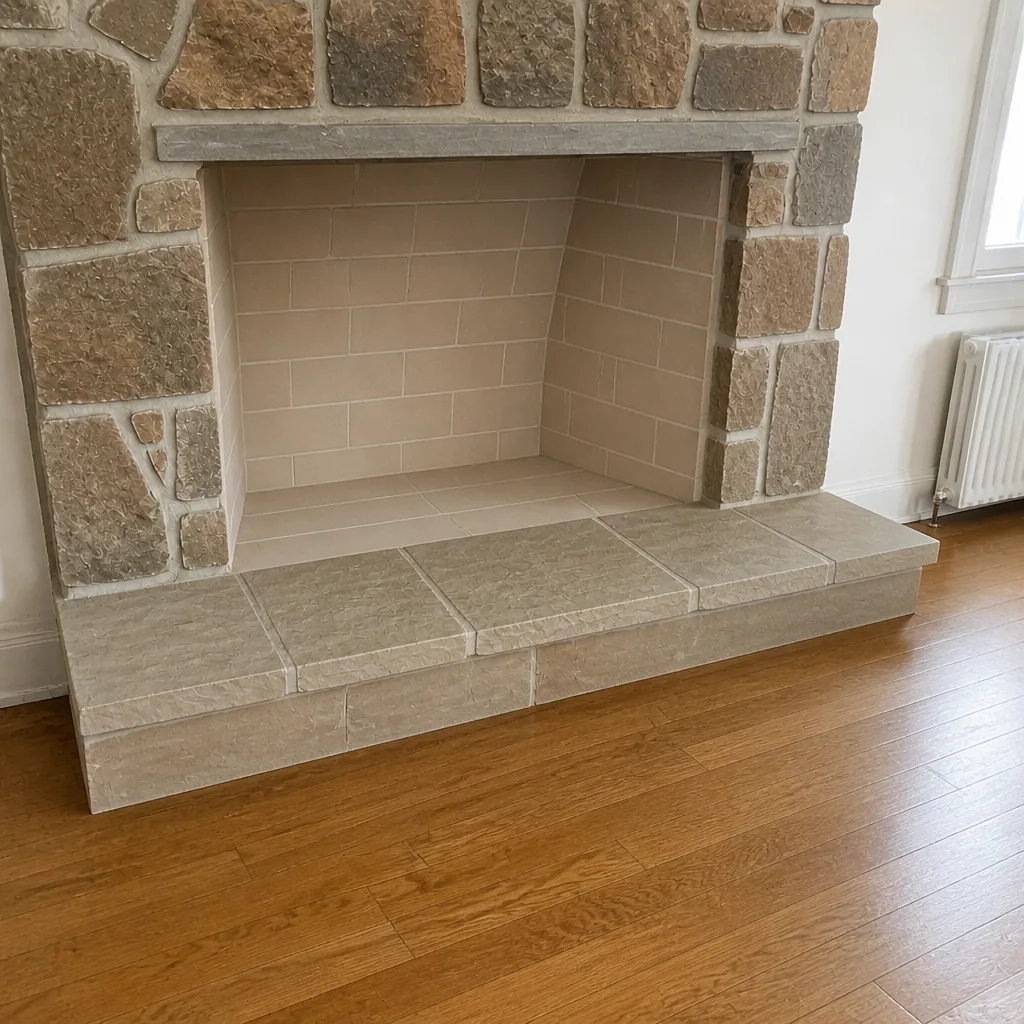
See the difference
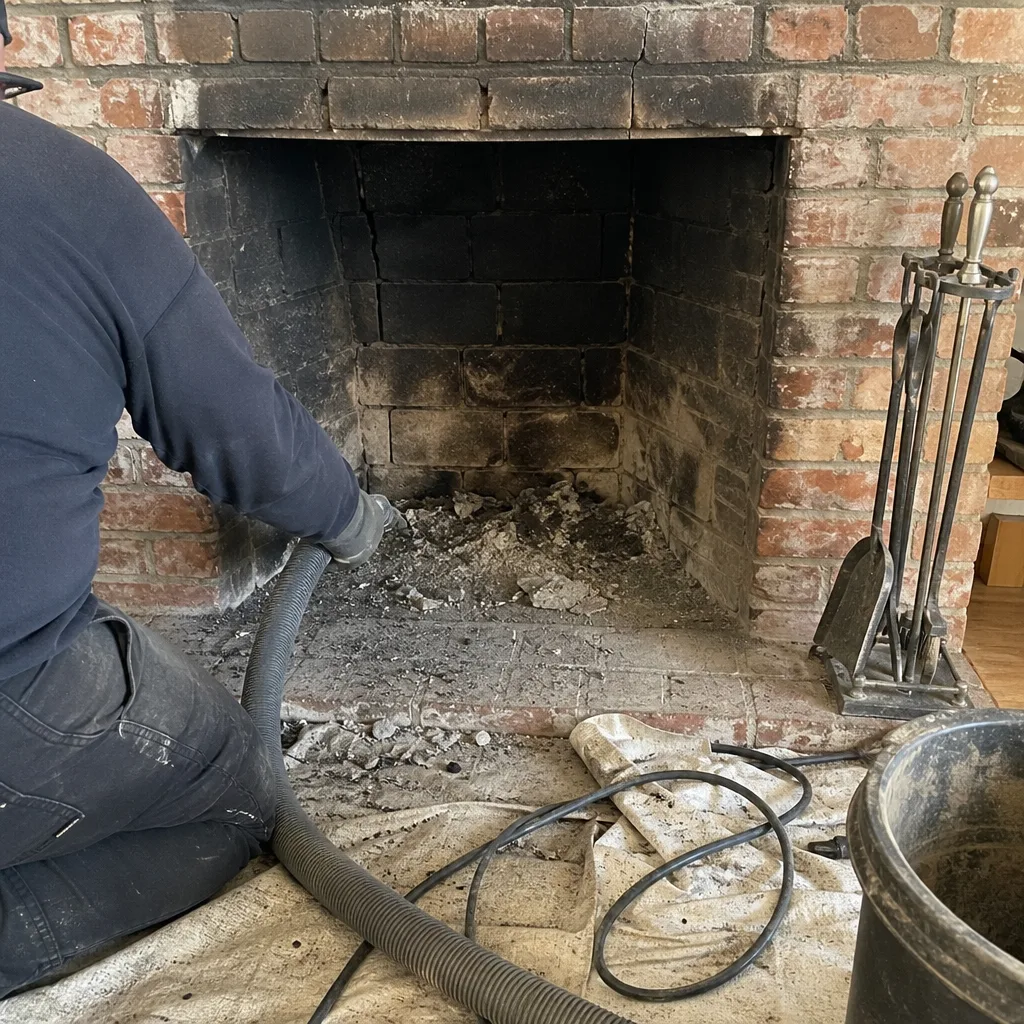 Before
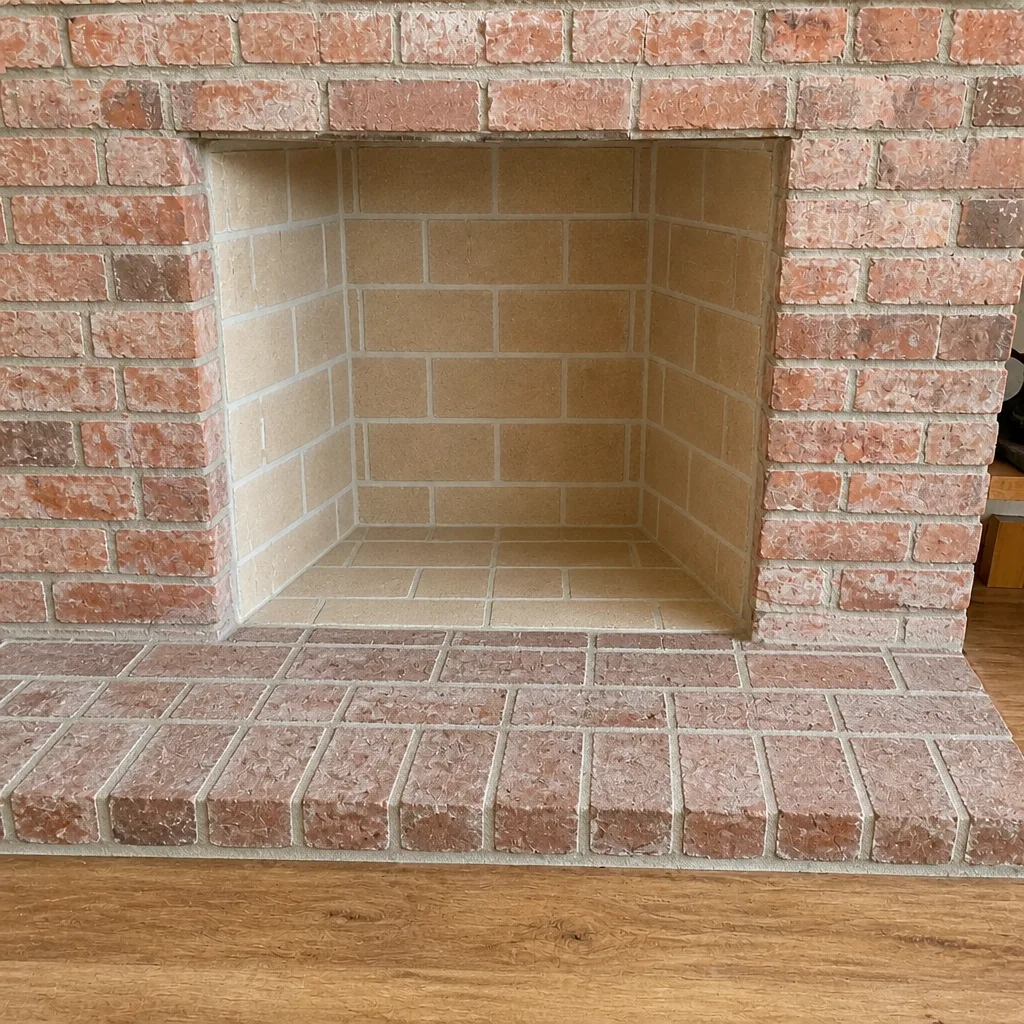 After
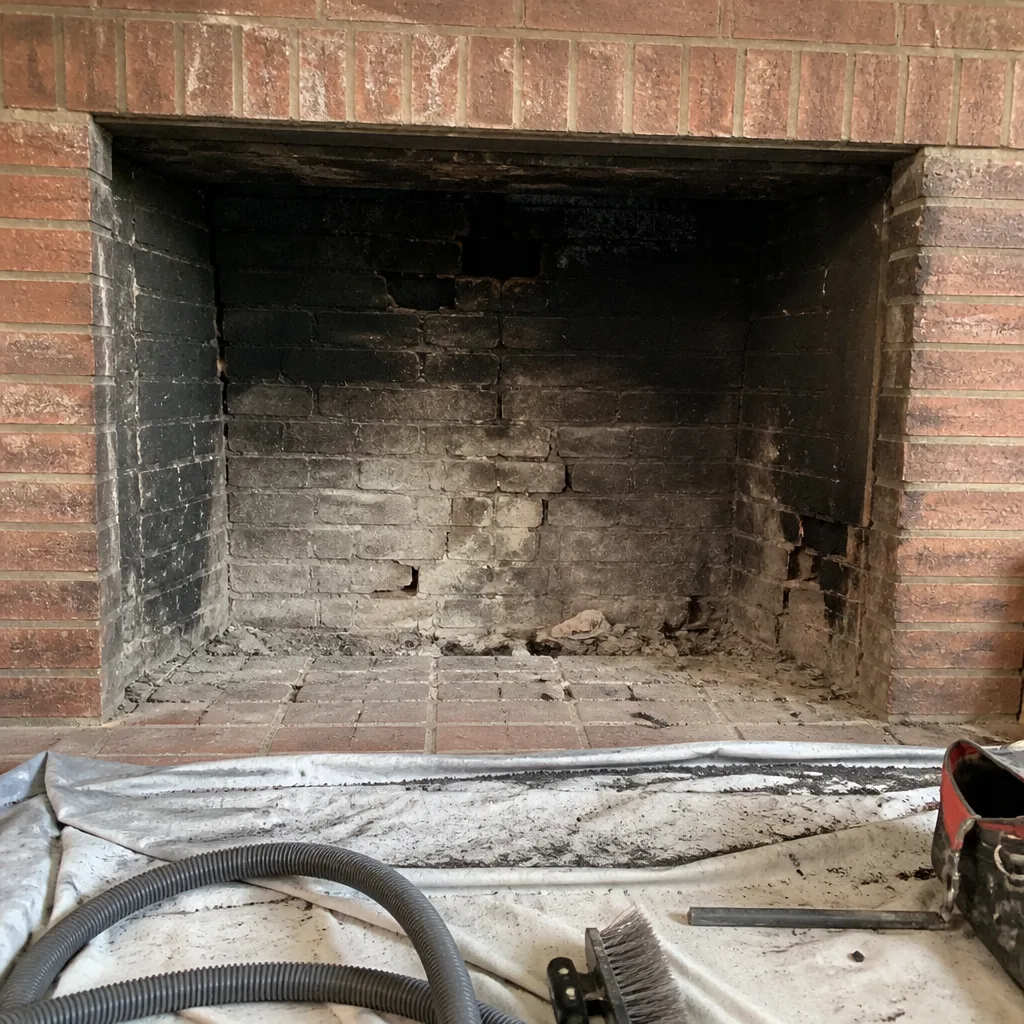 Before
 After
 Before
 After
When to Call a Professional
Some chimney problems are obvious; others only show up on a camera. Call a professional if any of these are true:
- You’ve never had the chimney inspected, or you bought the home without one.
- You had a chimney fire, even a small one, or heard roaring sounds from the flue during a burn.
- You see glossy black patches on the firebrick or the fireback.
- Your fire smokes into the room, dies out early, or smells smoky the day after.
- You can see cracked or missing mortar at the firebox, or a visibly cracked crown.
- You’ve added an insert, changed fuel, or replaced the firebox since the last inspection.
- You notice water stains on the chimney breast, or rust on the damper or firebox hardware.
Chimney Sweep Sedgefield offers free estimates in Sedgefield – call (855) 726-7779. We answer 24/7. Fast dispatch from 7am to 7pm, Sunday through Friday. Every estimate is written, our technicians have up to 9 years of experience, and nothing is recommended without a camera image you can see for yourself.
Frequently Asked Questions
A chimney sweep in Sedgefield is typically priced per job based on the size and condition of the chimney, and that range is set by the written estimate after we see it. What drives the price is the number of flues, whether a camera inspection is included, and whether anything has to be removed to access the smoke chamber. Our estimates are free and in writing before we book the sweep. Call (855) 726-7779 for an exact quote – estimates are free.
Most Sedgefield homes used regularly throughout the winter should be swept once a year. Homes that burn a heavy mix of softwood, or that burn frequently through a long season, may need a mid-season cap check as well. Homes used lightly may go a bit longer between sweeps, but a Level 2 inspection at purchase and an annual Level 1 check are still the safe baseline. Our technicians assess the flue at the end of each season and tell you whether your interval should be shorter or can be longer – call (855) 726-7779 to schedule.
Damaged clay flue tiles often can be resurfaced rather than fully replaced. We install HeatShield as a ceramic resurfacing system when the clay tile is pitted or cracked but the structure of the flue is intact, and it restores the flue surface without the cost of a full reline. When a liner genuinely has to be replaced, we use DuraFlex flexible stainless-steel systems so the new liner is built to last, not patched. The decision is based on the camera image and the visible condition of the flue – nothing is recommended without seeing the evidence. Call (855) 726-7779 for an exact quote – estimates are free.
Creosote builds up and the flue loses its ability to vent smoke cleanly, which raises the risk of a chimney fire and lets exhaust gases linger in the wrong places. In a humid climate like Sedgefield’s, the buildup can move from soot to glazed creosote faster than most people expect, and water leaks through a failing cap or crown can begin to damage the masonry. Skipping a season does not cause an immediate problem in every case, but it does make whatever comes next more expensive. If it has been more than a year, call (855) 726-7779 – estimates are free.
A Level 1 inspection checks everything you can see from the firebox up through the flue throat without a camera. A Level 2 adds a camera run through the full flue and applies after a chimney fire, a home purchase, a change in appliance or fuel, or a storm. Most Sedgefield homes start at Level 1 for annual maintenance and move to Level 2 whenever the system has changed. Both come with a written photo report so you have a record of the condition of the flue.
Late summer is the easiest time to book – the flue is empty and scheduling is simpler than during the first cold snap in fall. Spring is the second-best window, right after pine pollen settles, so the flue spends the humid off-season clean. If either window has passed and you are heading into the burning season, book before your first fire – call (855) 726-7779. We answer 24/7. Fast dispatch from 7am to 7pm, Sunday through Friday.
The Bottom Line
Chimney cleaning in Sedgefield is not a single annual task – it’s a year-round rhythm tuned to a humid climate, a heavy pollen season and a fuel mix that drives creosote faster than most guides account for. The shortest version of the guide: sweep once a year, inspect the flue with a camera at least at the signs in this article, keep the cap and crown in good condition, and treat every cracked tile as a decision between repair and replacement rather than a default reline. We work with professional-grade materials from DuraFlex, HeatShield and Olympia Chimney because they’re what we’d want in our own homes. When you’re ready for a written estimate, we’re a phone call away.
Call (855) 726-7779 for a free estimate. We answer 24/7. Fast dispatch from 7am to 7pm, Sunday through Friday. Whether you need a routine chimney sweep before the season starts, fireplace repair after a hard winter, or a full assessment from Chimney Sweep Sedgefield, one team handles it from the first inspection through the last repair. Nothing is recommended that you can’t verify on the camera report, and we’ll tell you plainly when work can safely wait.
Written by the team at Chimney Sweep Sedgefield.